
Commentary by Richard Goodfellow, June 2014, Scancell
Despite all the advances in melanoma treatments in the past 4 years, we're still not quite there yet! I thought this essay was interesting...though you must keep in mind that the author is the chief executive officer of the company that makes SCIB1. However, Bent has always held that dendritic cells will prove essential in really understanding and treating melanoma.
Excerpts: "Checkpoint inhibitors enable the host immune system to resume its ability to recognize, attack, and destroy cancer cells. Ipilimumab was the first. Drugs blocking PD-1 and its ligand PD-L1 are in advanced trials. However, checkpoint inhibitors cannot work...if the patient fails to mount an adequate immune response or if the tumor evolves so that is it no longer recognized by the pre-existing immune response."
"[Anti-] PD-1 drugs are being combined with ipi, tyrosine kinase inhibitors (sunitinib and erlotinib); with anti-CD27 antibody varlilumab; and BRAFi [to try to answer the lack] though side effects are often an issue with these combos."
"Taking the brake off T cells with checkpoint inhibitors whilst simultaneously pressing the accelerator using active immunotherapies is a logical next step... Vaccines can stimulate 'de novo' immune responses, but until recently, none of the vaccines...have been able to produce potent T cells with the power and specificity to recognize and kill tumor cells. Peptides and MAGE vaccines failed to show any advantage. A phase 3 study of a virus encoding GM-CSF has shown some promising results, but the patient must have accessible tumors."
"We would argue that this advantage can be obtained by using the power of dendritic cells, the 'generals of the immune response army'. Our first product, SCIB1, is a DNA plasmid encoding an antibody with four melanoma-specific T cell epitopes grafted into its structures. We use eletroporation (the use of electrical fields to increase DNA drug delivery efficiency by up to 1000 fold compared to conventional injection) in conjunction with IM injection to deliver SCIB1 to patients. This results in the direct uptake of DNA into cells and also enhances the immune response by targeting the expressed hybrid antibody to dendritic cells via the CD64 receptor."
"Data from a Phase 1/2 clinical trial of SCIB1 in patients with advanced melanoma has shown high immune response rates, evidence of prolonged survival and tumor destruction with a benign side effect profile. Median survival time in patients with Stage III/IV disease is now 30 months since patients entered the study. Patients with resected Stage IV disease are all still alive 19-41 months since tumor removal. This compares favorably with published survival rates for patients with resected disease where 50% of Stage IV patients usually die within 21 months of surgery."
Hmmm... I haven't seen any published research data for SCIB1 yet. Most of the pr...IS pr...being put out by the company or other pharma investments firms. But....the trial is real, though only in the UK at this time...here's the link:
Link to clinical trial with SCIB1
Would love for this to hold the key! We'll see what happens! - c
Saturday, November 15, 2014


Thursday, November 13, 2014
Skin stuff with Anti-PD1
I have certainly had weird skin things during and after being on Nivo!!! Of course weird skin thing numero uno was melanoma!!! Much as we have with ipi, as more folks take the anti-PD1 drugs, we will find out even more things about their side effects and how to deal with them.
Lichenoid dermatitis in two patients with metastatic melanoma treated with anti-PD1 therapy.
Joseph, Goedjen, Gordon, et al. Cancer Immunol Res. 2014 Oct 6.
The "two most common side effects of anti-PD1/PDL1 therapies include rash and [itching] occurring in about 20% of patients. While the rash is generally attributed to be immune mediated, the exact mechanisms of the rash remain unclear....We report two cases of lichenoid dermatitis [A scaly, itchy rash...resembling eczema or psoriasis and can be purplish in color.] in two patients treated with MK-3475 that were characterized with marked T-cell infiltrates with few PD-1 positive cells. Both patients were taking lisinopril [An ACE inhibitor used to treated increased blood pressure and congestive heart failure.], an agent associated with lichenoid reactions, however, neither had a rash prior to starting MK-3475. Both rashes were relatively mild allowing treatment to continue and responded to topical steroids.
Yours, c
Lichenoid dermatitis in two patients with metastatic melanoma treated with anti-PD1 therapy.
Joseph, Goedjen, Gordon, et al. Cancer Immunol Res. 2014 Oct 6.
The "two most common side effects of anti-PD1/PDL1 therapies include rash and [itching] occurring in about 20% of patients. While the rash is generally attributed to be immune mediated, the exact mechanisms of the rash remain unclear....We report two cases of lichenoid dermatitis [A scaly, itchy rash...resembling eczema or psoriasis and can be purplish in color.] in two patients treated with MK-3475 that were characterized with marked T-cell infiltrates with few PD-1 positive cells. Both patients were taking lisinopril [An ACE inhibitor used to treated increased blood pressure and congestive heart failure.], an agent associated with lichenoid reactions, however, neither had a rash prior to starting MK-3475. Both rashes were relatively mild allowing treatment to continue and responded to topical steroids.
Yours, c
Tuesday, November 11, 2014
Just for fun...crazy wonderful skirts!!!
I made some rather simple summer dresses, but decided to jazz things up with some crazy skirts!!!
Sante'! -c
 |
| Loved this material so much (Though there were those who said, as I proudly displayed this material after purchase, "You would never wear that!" How wrong they were. How little they know me!) that I had the bright idea to widen the A of the a-line skirt pattern I was using!! |
 |
| Turns out, I am NOT ready for drafting my own patterns!!! I looked like a puff butt oompa-loompa!!!! But (no pun intended) after adding a pleat on either side, per Rosie's advice, I calmed the bubble!!! Another sad fact. I worked REALLY hard to match these polka dots!!! Hmmm...... |
 |
| Have some minor concerns about the appearance of some sort of dinosaur tail (Is it a stegosaurus???) going up the rear.....but, what's a girl to do? On the good side....it is stitched together beautifully (if I say so myself!!!) with completely finished insides and I am really happy with the end product. Also on the good side...though not at the time!!! My serger ran out of thread in one bobbin in the middle of this production...thereby FORCING ME...yes, forcing...me to learn to thread the sucker...which...I did...so YAY! |
 |
| Simple A-line (the pattern I probably should have stuck with!!!) but done up in wonderful wines of the world! And, YES!!! The sides and rear line up perfectly on this one!!! I told B this one was perfect for a trip to France...or a wine tasting party at the very least!!! |
Friday, November 7, 2014
Sargramostim ~ aka GM-CSF or leukine
Sargramostim, GM-CSF (granulocyte-macrophage colony stimulating factor), leukine, oh my!!!
With the report in HealthDay News breaking Nov. 4 and the actual study: Ipilimumab plus sargramostim vs ipilmumab alone for the treatment of metastatic melanoma: a randomized clinical trial (Hodi, Lee, McDermott, et al.) being published in JAMA on the fifth....questions on melanoma blogs and forums have gone through the roof!!!
So....here's my best interpretation of what it all means. First of all, let's back up a step! Yes, the magical "sargramostim" is the same thing as GM-CSF, leukine and used in OncoVex. It is an immunostimulator used most often to help grow new white cells after a bone marrow transplant or when they have been depleted by conventional chemo in diseases like leukemia.
OR....here's what I noted before in a post about the intralesional therapy OncoVEX:
"OncoVEX is a 2nd generation herpes virus embedded with GM-CSF...a substance that causes the body to make more white cells. (GM-CSF can be given to premature babies and leukemia patients with low white cell counts to help build them back up....and reverse immune suppression.) But, in OncoVEX, it is thought to only replicate in the tumor cells. The white cells produced in the process kill off the tumor cells. In a phase 2 trial reported in 2012, 20% of patients achieved a complete response and 28% gained an overall response. 92% of the responses were durable to at least 6 months, and the majority were ongoing with a range of 18-40 months. Responses were found in patients with all stages and systemic tumors were eradicated in some patients."
OR...here's where Ribas and Weber discussed T-VEC vs GM-CSF and an abstract of a study that used GM-CSF and IL-2 as an injectable therapy
Ribas: ...a randomized trial of an injectable virus called T-VEC compared with granulocyte-macrophage colony stimulating factor (GM-CSF).
Weber: ...the responses were 16% vs 2%. Obviously you don't expect any responses with GM-CSF, so 2% would be essentially zero. A 16% response rate overall in a patient with injectable local-regional disease plus systemic disease is pretty modest....
Tumor response and patient survival after intralesional therapy with low-dose GM-CSF and IL-2 in metastatic and primary cutaneous melanoma: An exploratory study. Elisas & Sharma
Patients with dermal and subdermal mets, no matter the extent of their disease or previous therapy, were given intralesional GM-CSF once a week for 4-6 weeks. If no complete clinical response was noted at the injection sites, they were then given intralesional IL-2 for the same length of time. Results: 4 patients with more than 126 small in-transit mets, each lesion measured a few mm to up to 1 cm. All had a complete response confirmed pathologically 6-8 weeks after cessation of therapy, with disease free survival of 37-54 months. Another 3 patients with large sclerotic skin lesions failed to respond to either cytokine. One of 2 patients with distant mets who also had palpable subdermal tumors had complete response of all mets. This patient is alive and disease free for over 48 months. Conclusion: [After examination of the tissues resected after treatment...] Intralesional therapy seemed to utilize the tumor site as a source for tumor-specific antigens giving rise to autoimmunization with strong antitumor response...
THE NEWS!!!
Clearly, this drug is not unknown to oncology or even melanoma world...it has been used as a control, combined with IL-2 and with a viral vector as an injectable therapy. The story now is that Hodi et al., wanted to see if, when given systemically WITH ipi, would the immune stimulating effects of GM-CSF boost the patient's response to ipi??? A randomized clinical trial with 245 stage III or IV unresectable melanoma patients (12/2010 - 7/2011) were given either ipi at 10mg/kg plus sargramostim 250ug subcutaneously or ipi alone. RESULTS: Median OS for combo was 17.5 months vs 12.7 months for ipi alone. 1 year survival for combo was 68.9% vs 52.9% for ipi. PFS was only 3.1 months for both groups. Grade 3/5 adverse events occurred in 44.9% of the combo group but even more frequently in the ipi only group at 58.3%.
So....GM-CSF decreased side effects when combined with ipi and resulted in longer overall survival, but provided no additional benefit in progression free survival.
In Reinberg's report in HealthDay, he indicated that Dr. Doris Day (I know!!! Her parents didn't like her!!!) had a rather positive view of the results while Hodi (lead researcher in the study) didn't "know whether starting combination therapy before melanoma spread will improve survival." Reinberg concluded his report with a quote from Dr. Mario Sznol, "Overall, these are interesting results..., but the field has moved so quickly, that it may be difficult to follow up..." Noting also that pembro and nivo alone will probably be more effective and less toxic. Finally, Sznol stated, "So these results, even if confirmed, are not as important as they would have been several years ago."
My Take:
With the report in HealthDay News breaking Nov. 4 and the actual study: Ipilimumab plus sargramostim vs ipilmumab alone for the treatment of metastatic melanoma: a randomized clinical trial (Hodi, Lee, McDermott, et al.) being published in JAMA on the fifth....questions on melanoma blogs and forums have gone through the roof!!!
So....here's my best interpretation of what it all means. First of all, let's back up a step! Yes, the magical "sargramostim" is the same thing as GM-CSF, leukine and used in OncoVex. It is an immunostimulator used most often to help grow new white cells after a bone marrow transplant or when they have been depleted by conventional chemo in diseases like leukemia.
OR....here's what I noted before in a post about the intralesional therapy OncoVEX:
"OncoVEX is a 2nd generation herpes virus embedded with GM-CSF...a substance that causes the body to make more white cells. (GM-CSF can be given to premature babies and leukemia patients with low white cell counts to help build them back up....and reverse immune suppression.) But, in OncoVEX, it is thought to only replicate in the tumor cells. The white cells produced in the process kill off the tumor cells. In a phase 2 trial reported in 2012, 20% of patients achieved a complete response and 28% gained an overall response. 92% of the responses were durable to at least 6 months, and the majority were ongoing with a range of 18-40 months. Responses were found in patients with all stages and systemic tumors were eradicated in some patients."
OR...here's where Ribas and Weber discussed T-VEC vs GM-CSF and an abstract of a study that used GM-CSF and IL-2 as an injectable therapy
Ribas: ...a randomized trial of an injectable virus called T-VEC compared with granulocyte-macrophage colony stimulating factor (GM-CSF).
Weber: ...the responses were 16% vs 2%. Obviously you don't expect any responses with GM-CSF, so 2% would be essentially zero. A 16% response rate overall in a patient with injectable local-regional disease plus systemic disease is pretty modest....
Tumor response and patient survival after intralesional therapy with low-dose GM-CSF and IL-2 in metastatic and primary cutaneous melanoma: An exploratory study. Elisas & Sharma
Patients with dermal and subdermal mets, no matter the extent of their disease or previous therapy, were given intralesional GM-CSF once a week for 4-6 weeks. If no complete clinical response was noted at the injection sites, they were then given intralesional IL-2 for the same length of time. Results: 4 patients with more than 126 small in-transit mets, each lesion measured a few mm to up to 1 cm. All had a complete response confirmed pathologically 6-8 weeks after cessation of therapy, with disease free survival of 37-54 months. Another 3 patients with large sclerotic skin lesions failed to respond to either cytokine. One of 2 patients with distant mets who also had palpable subdermal tumors had complete response of all mets. This patient is alive and disease free for over 48 months. Conclusion: [After examination of the tissues resected after treatment...] Intralesional therapy seemed to utilize the tumor site as a source for tumor-specific antigens giving rise to autoimmunization with strong antitumor response...
THE NEWS!!!
Clearly, this drug is not unknown to oncology or even melanoma world...it has been used as a control, combined with IL-2 and with a viral vector as an injectable therapy. The story now is that Hodi et al., wanted to see if, when given systemically WITH ipi, would the immune stimulating effects of GM-CSF boost the patient's response to ipi??? A randomized clinical trial with 245 stage III or IV unresectable melanoma patients (12/2010 - 7/2011) were given either ipi at 10mg/kg plus sargramostim 250ug subcutaneously or ipi alone. RESULTS: Median OS for combo was 17.5 months vs 12.7 months for ipi alone. 1 year survival for combo was 68.9% vs 52.9% for ipi. PFS was only 3.1 months for both groups. Grade 3/5 adverse events occurred in 44.9% of the combo group but even more frequently in the ipi only group at 58.3%.
So....GM-CSF decreased side effects when combined with ipi and resulted in longer overall survival, but provided no additional benefit in progression free survival.
In Reinberg's report in HealthDay, he indicated that Dr. Doris Day (I know!!! Her parents didn't like her!!!) had a rather positive view of the results while Hodi (lead researcher in the study) didn't "know whether starting combination therapy before melanoma spread will improve survival." Reinberg concluded his report with a quote from Dr. Mario Sznol, "Overall, these are interesting results..., but the field has moved so quickly, that it may be difficult to follow up..." Noting also that pembro and nivo alone will probably be more effective and less toxic. Finally, Sznol stated, "So these results, even if confirmed, are not as important as they would have been several years ago."
My Take:
- Yes, I think here, as with all immunotherapies, we've learned enough to know that starting them sooner, rather than later, with the least tumor burden possible, is better. How much better would this turn out to be? We don't know.
- Nobody is giving ipi at 10mg/kg anymore....at least not in anything other than a clinical trial. And even there, we've learned that when using ipi combinations...ipi is the bad boy in terms of adverse effects. That is why many of the ipi/nivo combo trials have 'flipped' their dosages...giving a smaller dose of ipi and a larger one of nivo...creating a much better side effect profile and as good or better results. What would the results of this study have been if ipi had been dosed at the now FDA approved 3mg/kg?
- As I've noted in several prior posts...there are many ongoing/developing studies looking at immunotherapy combinations: ipi and nivo, ipi and TVEC, ipi and INCBO24360 (an IDO inhibitor)....not to mention...Pembro and TVEC, Pembro and an IDO inhibitor, Pembro and BRAFi, Nivo and antiCD137, Nivo and anti-LAG-3...etc. I fear Sznol may be right. While these results would have looked incredibly good to me when I needed treatment in 2010, thankfully, with the current anti-PD1 drugs and other immunotherapy combinations....ipi and Sargramostim may not work as well as some of the options currently available or rapidly on their way.
Thursday, November 6, 2014
More reasons to treat melanoma brain mets with checkpoint inhibitors!!!!
Tumor infiltrating lymphocytes and expression of programmed death ligand 1 (PD-L1) in melanoma brain metastases.
Berghoff, Ricken, Widhalm, et al. Histopathology. 2014 Oct 14.
"Little is known about the inflammatory response to melanoma brain mets. We investigated PD1, PD-L1, CD3, CD8, CD45RO, FOXP3, CD20, and BRAF V600E by immunohistochemistry in 43 brain met samples. BRAF V600E positive = 62.8%. CD3 positive TILs were evident in 76%. CD8 positive = 90%. CD45RO positive = 74%. PD1 positive = 62%. FOXP3 positive = 48%. CD20 positive TILs were found in 44%. PD-L1 expression was observed in 51%. Of these, 40% presented with PD-L1 expression over 5% of tumor cells. PD-L1 expression was associated with higher density of PD1, CD3, and FOXP3 positive TIL infiltration. PD-L1 expression or PD1, CD3, CD8, or CD45RO positive TIL density did not correlate with BRAF status, previous systemic therapy or survival."
Conclusion: "Melanoma brain mets show considerable lymphocytic infiltrates and expression of PD-L1 in the majority of investigated specimens, with high PD-L1 expression found predominately in regions of abundant inflammation. Our data indicate that clinical studies should investigate the value of checkpoint inhibitors in patients with melanoma brain metastasis."
Amen and amen! So let's go!!! - c
Sunday, November 2, 2014
Review of immunotherapy and durable benefit in melanoma!!!
This article, by some of the biggest dogs in melanoma care today, David McDermott, Celeste Lebbe`, Stephen Hodi, Michele Maio, Jeff Weber, Jedd Wolchok, John Thompson and Charles Balch, was published in Cancer Treatment Reviews, June 2014....
"Historically,...overall survival for patients with Stage IV melanoma was less than 1 year and...5-year survival rate was ~10%. Recent advances in therapy have raised 5-year survival expectations to ~20%. Notably, a subset of melanoma patients who receive immunotherapy....can achieve long-term survival of at least 5 years. A major goal...is to increase the number of patients who experience this overall survival benefit... [We] discuss...attributes of immunotherapy and newer targeted agents...how combination strategies might improve...durable benefit and long-term survival...[and] three areas we believe will be critical to making further advances...first, [we] present data from ipilimumab...trials in which a subset of patients experienced durable responses. Second, we discuss the limitations of traditional metrics used to evaluate the benefits of immunotherapies. Third, we consider emerging issues... A better understanding of these novel treatments may improve survival..., increase the number of patients who experience this...benefit, and inform the future use of these agents...."
Here's the link to read it for yourself:
Durable benefit and the potential for long-term survival with immunotherapy in advanced melanoma
Points that struck me:
Immunotherapy -
"Initial attempts to improve outcomes...in advanced melanoma focused on high-dose interleukin-2 (HD IL2), a cytokine that induces T-cell activation and proliferation. ....Phase II trial at NIH...while only 7% of melanoma patients treated with HD IL2 achieved complete regression, responses were maintained for up to 91+ months... HD IL2 may provide durable responses of over 10 years in some....use is limited by severe toxicity...[which] prompted investigations of low-dose IL2...[and though] less toxic...it has failed to produce complete and durable response. ...the experience with DC IL2 provides proof-of-concept that modulation of the immune system might offer durable...benefit... [With] more tolerable immunotherapies, the role of single agent HD IL2 remains to be determined...
Improved...understanding of tumor immunology...led to the development of targeted immunotherapies aimed at specific immune-checkpoints. [Those] currently being targeted....include cytotoxic T-lymphocyte-associated antigen 4 (CTLA-4), programmed death-1 (PD-1), and programmed death ligand-1 (PD-L1). ...CTLA-4 acts early in the tumor response to regulate T-cell proliferation and migration...PD-1 and its ligand PD-L1 regulate T-cell activation and proliferation at the tumor site.....Ipilimumab (ipi), which targets CTLA-4, was approved by the...FDA...in 2011. [Multiple studies demonstrated survival benefit with ipi.] Data from these and other clinical trials suggest that a proportion of patients treated with ipi can achieve survival of at least 5 years. In [one study] 5-year survival was...17% for ipi 3mg/kg and 17-49% for ipi 10mg/kg.
... A meta-analysis of pooled OS data from ipi trials...[with] 1861 melanoma patients reported a 3-year OS rate of 22%...a plateau in the...Kaplan-Meier curve began at approximately 3 years after initiation of therapy, and extended through follow-up as long as 10 years...some patients...were no longer receiving treatment, suggesting that treatment-free survival is possible with ipi.
....Nivolumab and Pembrolizumab with target PD-1 have demonstrated clinical activity...whether responses will be similarly durable...remains to be determined, but preliminary evidence suggest that this may be the case.
...Phase 1...trials suggest that...targeting PD-L1 may be effective... Among 52 patients...treated with...MDX1105, 17% achieved an objective response, 27% had stable disease lasting 24 weeks or more. ...MPDL3280A, another PD-L1 inhibitor [had] objective responses in 9 of 35...patients, with all responses improving or ongoing at time of tumor assessment. A phase 1...trial is...underway with...PD-L1 inhibitor MEDI4736 in several tumor types (NCT01693562)."
Targeted therapy-
"...better understanding of biology of melanoma...led to...molecular targeted therapies....MAPK pathway is one of the major signaling networks involved in melanoma [growth]. A major driver of that pathway is BRAF...BRAF mutations are found in ~50% of melanomas...70-95% [are] V600E...[while] 5-30% are V600K...
Vemurafenib [a BRAF inhibitor]...was FDA approved in 2011 for...patients..[with] BRAF V600E... Data suggest that a subset [of these patients] may achieve survival up to 3 years with continuous, twice-daily vermurafenib treatment....but...responses...are usually of limited duration (6.7 months) due to the emergence of tumor resistance.
...In 2014 FDA approved the use of dabrafenib [a BRAF inhibitor] in combination with trametinib [a MEK inhibitor] for patients with BRAF V600E or V600K mutations....approval of combination was based on an improved ORR and median duration of response versus dabrafenib monotherapy... ORR = 76% for...combination vs 54% for...monotherapy...duration of response =10.5 months for combo vs 5.6 months for mono....
...current data suggest...Limitations with immunotherapies for some [are] low response rates, delayed onset of effect, toxicity that must be managed carefully, and [it is] difficult to predict which patients will respond...but treatment-free survival and durable responses are possible. Targeted therapies have: high response rates, side effects usually reversible with dose adjustment...but...require continuous twice daily dosing, may elicit resistance within 6-8 months, and generally do not provide long-lasting benefit after therapy is discontinued. Strategies that capitalize on the strengths and overcome the weaknesses associated with these treatments are needed and might possibly be achieved through combination and/or sequencing regimens."
Immunotherapy combination strategies-
NOTE: my shorthand synopsis -
Combination and sequenced regimens are being evaluated. Ipi and nivo: n = 17, objective response = 53%, disease control rate = 65%. Different study: n = 52, 21 had confirmed objective response ranging from 6-72+ weeks, with ongoing response observed in 91%. Immune related toxicity is greater for combo than with either single agent. Combination is being explored further.
Phase II trial ongoing with ipi and GM-CSF....prelim data...?? decreased incidence of GI and pulmonary AEs.
Ipi is being combined with BRAF inhibitors. Phase I ipi and vemurafenib was closed early due to liver toxicity. Phase II sequential ipi and vemurafenib ongoing. Ipi plus dabrafenib, with and without trametinib ongoing.
Ipi and standard cytotoxics: Ipi plus DTIC was associated with higher rates of liver problems and lower rated of gastric problems than those previously reported with either agent alone...ie toxicity is not as simple as combined effect. Ipi plus fotemustine - disease control = 46% in melanoma patients and 50% in patients with asymptomatic brain mets. Phase III trial being explored further. Ipi with temozolomide, cisplatin, interferon, or IL2 as well as ipi with carboplatin/paclitaxel is being examined.
Ipi with radiation. Various studies ongoing. Ipi with radiotherapy "has been shown to induce an abscopal effect, a phenomenon in which tumor regression occurs at a site distant from the primary site of radiotherapy." "A phase I study is investigating the maximum tolerated dose of ipi plus radiotherapy in melanoma patients with brain metastases. A phase II study is evaluating response rate associated with ipi alone vs ipi plus radiotherapy."
Characterizing long-term survivors-
"Long-term survivors among ipi-treated patients have included those who achieve CR, PR, SD, and...PD... Some patients with PD may actually develop a response or SD over time, possibly reflecting the long time required to build anti-tumor immunity... An important issue related to SD is whether this response category represents true residual disease or fibrotic tissue with no residual tumor....tumoral masses may appear to show incomplete regression, when in fact the remaining abnormal tissue is attributable to residual fibrosis....incorrect assessment of the tumor response could lead to an underestimation of the treatment effect."
"Durable responses to ipi do not appear to be associated with known prognostic factors or BRAF-mutation status. ...ipi is an effective treatment for advanced melanoma regardless of BRAF-mutation status."
[???....] "potential biomarkers that can predict response to ipi. ...absolute lymphocyte count...patients with high ALC levels after two ipi treatments had improved OS...patients with NY-ESO-1-specific CD8+ T-cell response experienced a significant survival advantage...increased circulating levels of inducible T-cells are associated with improved survival at week 7 of treatment...additional work is needed to...clarify predictive value of biomarkers in melanoma."
Refining assessment of clinical benefit-
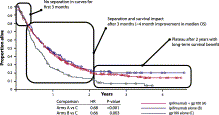
..."Nonconventional response patterns, which are unique to immunotherapy treatment include response following an initial increase in disease burden ('pseudoprogression') and response in the presence of new lesions. ... Kaplan-Meier curves from immunotherapy trials consistently show a delay in the separation of OS curves between treatment and control arms, which could relect the time needed for an immune response to translate into a survival effect. ...The challenge associated...if that it increases the statistical power necessary to differentiate the treatment and control arms."
"...the effectiveness of ipi in melanoma patients with brain mets continues to be explored."
"Because the subpopulation that experiences long-term benefit with ipi remains to be effectively characterized, another challenge is deciding when to move a patient who is receiving ipi on to the next therapy. ... A related challenge is determining whether immunotherapy or targeted agents should be used in the first-line setting. Prospective sequence trials will be needed to determine which treatment regimens are optimal for providing long-term benefit."
"...Patients who progress after ipi therapy may subsequently benefit from retreatment...the contribution of retreatment to overall survival remains to be determined."
So many questions remain...but we know ever so much more than when I first started this journey. Hopefully much more will be learned very soon!! Best - c
Saturday, November 1, 2014
My little goblins????

 |
| The tradition continues....every year...the great pumpkin carving!! |
 |
| Oh, my!!! |
 |
| Mother Nature! Before and After??? |
 |
| With Wolverine!!!! |
 |
| My, what long claws you have!!! |
 |
| Look what sharp teeth you have!!! |
 |
| What on earth has happened to my little mutant babies?!!! |
 |
| Oh! |
 |
| OK! |
 | ||
| There they are!!! |
Subscribe to:
Posts (Atom)