Monday, March 20, 2017

Surprise, surprise, surprise! The sooner brain mets are found - the better folks with melanoma, breast cancer, etc...do!!!


Do you ever read a statistical study that involves bunches of patients, expert researchers, thousands of samples, statisticians and probably a significant chunk of change and think, "No shit, Sherlock!!!"? It happens to me all the time! ~ Just out!  New expert findings regarding obesity in children!  In this new research, utilizing multiple offices and institutions, patient and parental questionnaires, cox 2 data analysis, and all sorts of other jabber, jabber - We have found that obese children are more sedentary and consume more calories than their thinner peers!!!"

In that vein...there is this...

Toward the complete control of brain metastases using surveillance screening and stereotactic radiosurgery. Wolf, Kvint, Chachoua, Pavlick, et al. J Neurosurg. 2017 Feb 17.

The incidence of brain metastases is increasing with improved systemic therapies, many of which have a limited impact on intracranial disease. Stereotactic radiosurgery (SRS) is a first-line management option for brain metastases. The purpose of this study was to determine if there is a threshold tumor size below which local control (LC) rates approach 100%, and to relate these findings to the use of routine surveillance brain imaging.
From a prospective registry, 200 patients with 1237 brain metastases were identified who underwent SRS between December 2012 and May 2015. The median imaging follow-up duration was 7.9 months, and the median margin dose was 18 Gy. The maximal diameter and volume of tumors were measured. Histological analysis included 96 patients with non-small cell lung cancers (NSCLCs), 40 with melanoma, 35 with breast cancer, and 29 with other histologies.
Almost 50% of brain metastases were NSCLCs and commonly measured less than 6 mm in maximal diameter or 70 mm3 in volume. Thirty-three of 1237 tumors had local progression at a median of 8.8 months. The 1- and 2-year actuarial LC rates were 97% and 93%, respectively. LC of 100% was achieved for all intracranial metastases less than 100 mm3 in volume or 6 mm in diameter. Patients whose tumors at first SRS were less than 10 mm maximal diameter or a volume of 250 mm3 had improved overall survival.  
SRS can achieve LC rates approaching 100% for subcentimeter metastases. The earlier initial detection and prompt treatment of small intracranial metastases may prevent the development of neurological symptoms and the need for resection, and improve overall survival. To identify tumors when they are small, routine surveillance brain imaging should be considered as part of the standard of care for lung, breast, and melanoma metastases.
#1.  Well, duh.  If you find brain tumors when they are small and zap them out of existence, patients do not suffer as much damage and live longer.
#2.  I don't I agree with the opening salvo:  "The incidence of brain metastases is increasing with improved systemic therapies, many of which have a limited impact on intracranial disease."  At least in the sense that, as melanoma patients live longer, DUE to systemic therapies....we are seeing more of everything...cause these peeps are not dead!  Also, I fear that since we have learned that we can zap many, many brain tumors sequentially or simultaneously with SRS and melanoma patients actually respond positively as they did NOT when only whole brain radiation was offered or utilized, I fear that some docs are not being as aggressive as they should be in finding a systemic therapy that actually DOES work for the patient who is having brain met after brain met!!!
(Here's a recent post that supports my disbelief!!! - SRS with any systemic therapy helps response in melanoma brain mets...)
#3.  Instead of using this data as a published study to pad your researcher resume...my dear researchers!!!....use it to get insurance companies in line with paying for melanoma patients' brain imaging...instead of telling ANY melanoma patient, much less one status post BRAIN TUMORS - 
"You may experience the pleasure of your CT scans as planned, however in regard to the MRI...."Based on eviCore Oncology Imaging Guidelines, we are unable to approve the study your doctor requested.  Your records show that you have SKIN DISEASE that is stage 2B to stage 4.  Follow up magnetic resonance imaging, detailed picture study, of your brain is supported for this problem once per year for the first 5 years after your skin disease was found.  Your records do not show that this applies to you. This decision just means your health plan won't pay for the service.  You can still receive the service, but you will need to pay for it yourself.  {signed} Michele Awobuluyi, MD"   (This was the Blue Cross response to my onc's request for my now annual scans...you can check out the entire outrageous story here:  August 2016: And then there's me...)
Researchers, you have the data, the reputation, the expertise, and the clout to put the pressure on insurance companies to provide the care that your patients need.  Do it!!!!
#4.  And since this is one more perfect opportunity to say it, "Michele Awobuluyi, MD, NYU alum - you are an ass and an idiot, a disgrace to your profession and a danger to society."  I hope you google your own name!!!
Being a rattie is tiring!  Hang tough, ratties.  Hang tough. - c

Sunday, March 19, 2017

PV-10 followed by radiation = ORR of 86% in in-transit, dermal and sub q melanoma


I have been yelling about intralesionals and Rose Bengal (PV-10) for YEARS!!!!!!!!!!!!!

Here's a review:
2016: Intralesional Therapy....and patterns of response from the T-VEC OPTiM trial
2016: Intralesional PV-10 (Rose Bengal, y'all!!!) positive treatment for in-transit melanoma
ASCO 2016: New studies! Rose Bengal and Pembro for Stage IV y'all!!! Enrolling! For Stage IIIb/c: PV-10 vs T-VEC.
2016: Study on Intralesional Rose Bengal out of Moffitt...we know a bit more about HOW it works!!!
2016: CAVATAK - intralesional therapy derived from the coxsackievirus
And finally, this one...with 3 links to additional reports from 2014, 2013, and 2012, and2014: More info from ASCO....PV-10...Rose Bengal for melanoma....

Now, there is this......

Results of a phase II, open-label, non-comparative study of intralesional PV-10 followed by radiotherapy for the treatment of in-transit or metastatic melanoma. Foote, Read, Thomas, et al. J Surg Oncol. 2017 Feb 23.

In-transit and recurrent dermal or subcutaneous melanoma metastases represent a significant burden of advanced disease. Intralesional Rose Bengal can elicit tumor selective ablation and a T-cell mediated abscopal effect in untreated lesions. A subset of patients in a phase II trial setting received external beam radiotherapy to their recurrent lesions with complete or partial response and no significant acute radiation reaction.
An open-label, single-arm phase II study was performed to assess the efficacy and safety of PV-10 followed by hypofractionated radiotherapy. Patients had in-transit melanoma metastases suitable for IL therapy and radiotherapy.
Fifteen patients were enrolled and thirteen completed both treatment components. The overall response rate was 86.6% and the clinical benefit was 93.3% on an intention to treat analysis. The median follow up duration was 19.25 months. Size of metastases (less than10 mm) predicted lesion complete response (74.6%). Treatment was well tolerated with no associated grade 4 or 5 adverse events.  
The combination of PV-10 and radiotherapy resulted in lesion-specific, normal tissue-sparing, ablation of disease with minimal local or systemic adverse effects.

Small numbers of patients, but the results - "Not bad, not at all bad!!!" - c

Friday, March 17, 2017

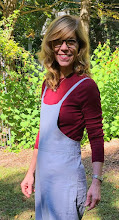
Sew Chaotically! - Rumi Dress by Christine Haynes


I loved this dress (and top) the minute I saw it on various sewing blogs I was spying on!!!!  And now that I've made it, I love it even more!!!!


The fabric is a BLUE waffle knit I ordered from Mood sometime ago.  It washes and dries beautifully and has the perfect drape for this dress.  I used some bits of it in this Linden sweatshirt!!!

Having used those bits in the Linden, I was a little short in being able to cut the hem band for the dress as the pattern directs and instead just cut the dress to the size 18 length.  Initially, I cut the size 10 in all other dimensions, but ended up taking the shoulder straps down to a two (so the neck line didn't fall below my boobers!!) and the sides to a 6 at the bust graduating back to the 10 at the sides.  I did sew in some stabilizing tape to the shoulder seam to help prevent that seam from stretching.

The neck and arm bindings go on like a dream.  I just cut those pattern pieces down to match the size I settled on in those areas.  

I sewed the bindings in place using my sewing machine, then serged them, and finished them off with a zig zag stitch on my sewing machine. I serged the bottom edge of the hem, applied knit stay tape to give a little support and a clean edge when I folded the hem up, and zig zagged that in place as well.
This has been such a fun and rewarding sewing project.  Now the weather just needs to warm up so I can whirl around in my cute dress!!!  Sew Chaotically! - les

Thursday, March 16, 2017

COX-2 expression correlates with PD-L1 expression on melanoma cells - or....how NSAID's like aspirin and advil might help melanoma patients????


COX-2 expression in melanoma cells is what has given the hope (??? data) that the use of NSAID's (advil, aspirin, etc) might enhance the response from immunotherapy in melanoma patients as noted in this post (with links to others within):  Sooo....advil works for SOME melanoma patients?????

COX-2 expression positively correlates with PD-L1 expression in human melanoma cells. Botti, Fratangelo, Cerrone, et al. J Transl Med. 2017 Feb 23.

The resistance to PD-1/PD-L1 inhibitors for the treatment of melanoma have prompted investigators to implement novel clinical trials which combine immunotherapy with different treatment modalities. Moreover is also important to investigate the mechanisms which regulate the dynamic expression of PD-L1 on tumor cells and PD-1 on T cells in order to identify predictive biomarkers of response. COX-2 is currently investigated as a major player of tumor progression in several type of malignancies including melanoma. In the present study we investigated the potential relationship between COX-2 and PD-L1 expression in melanoma.

Tumor samples obtained from primary melanoma lesions and not matched lymph node metastases were analyzed for both PD-L1 and COX-2 expression by IHC analysis. Status of BRAF and NRAS mutations was analyzed by sequencing and PCR. Co-localization of PD-L1 and COX-2 expression was analyzed by double fluorescence staining. Lastly the BRAFV600E A375 and NRASQ61R SK-MEL-2 melanoma cell lines were used to evaluate the effect of COX-2 inhibition by celecoxib on expression of PD-L1 in vitro.

BRAFV600E/V600K and NRASQ61R/Q61L were detected in 57.8 and 8.9% of the metastatic lesions, and in 65.9 and 6.8% of the primary tumors, respectively. PD-L1 and COX-2 expression were heterogeneously expressed in both primary melanoma lesions and not matched lymph node metastases. A significantly lower number of PD-L1 negative lesions was found in primary tumors as compared to not matched metastatic lesions. COX-2 expression significantly correlated with PD-L1 expression in both primary and not matched metastatic lesions. Furthermore, in melanoma tumors, cancer cells expressing a higher levels of COX-2 also co-expressed a higher level of PD-L1. Lastly, inhibition of COX-2 activity by celecoxib down-regulated the expression of PD-L1 in both BRAFV600E A375 and NRASQ61R SK-MEL-2 melanoma cell lines.  

COX-2 expression correlates with and modulates PD-L1 expression in melanoma cells. These findings have clinical relevance since they provide a rationale to implement novel clinical trials to test COX-2 inhibition as a potential treatment to prevent melanoma progression and immune evasion as well as to enhance the anti-tumor activity of PD-1/PD-L1 based immunotherapy for the treatment of melanoma patients with or without BRAF/NRAS mutations.

Breaking it down:  This report supports the notion that there is a relationship between COX-2 and PD-L1 expression in melanoma. Therefore, if we could block COX-2 we would reduce PD-L1 expression in melanoma cells and make anti-PD-1 drugs more effective. That's the theory anyway!!   - c

Wednesday, March 15, 2017

Chaotic Cookery! - From Someone Else's Table: Broccoli Lemon Soup


This recipe was inspired by one I saw from Food 52.  While I love a thick cheesy broccoli soup, this lighter version with the tang of lemon is really perfect.  On this chilly day with our second snow in the past few days...while harboring hopes for spring...this fresh, but warming soup is just what the doctor ordered!

Broccoli Lemon Soup

1 clump broccoli - in my world stores usually package 2 - 3 stalks together
3 cloves garlic, minced     3 T olive oil      s/p to taste
6 c chicken broth     1 c Parmesan, grated       1-2 lemons

Saute garlic in oil until tender and oil is flavored.  Add broccoli, including stalks chopped up with tough bits removed.  Toss broccoli around and simmer on low, covered, until broccoli is tender, about 10-15 minutes.  Take out pretty florets when they are just bite tender and set aside.  Add stock and simmer about 15 minutes.  Let cool.  Puree.  Add lemon juice and parm.  Bring back to simmer and toss in reserved florets.  Serve with crusty bread and a salad for a great veggie meal.

So good!!  Enjoy your dinner From Someone Else's Table! - c

Monday, March 13, 2017

The whole she-bang - immunotherapy WITH BRAF/MEK for melanoma...


I posted this in November:  BRAF/MEK combined with immunotherapy!!!

Now there is this:

Targeting the MAPK and PI3K pathways in combination with PD1 blockade in melanoma.  Deken, Gadiot, Jordanova, et al.  Oncoimmunology. 2016 Oct 14.

Immunotherapy of advanced melanoma with CTLA-4 or PD-1/PD-L1 checkpoint blockade induces in a proportion of patients long durable responses. In contrast, targeting the MAPK-pathway by selective BRAF and MEK inhibitors induces high response rates, but most patients relapse. Combining targeted therapy with immunotherapy is proposed to improve the long-term outcomes of patients. Preclinical data endorsing this hypothesis are accumulating. Inhibition of the PI3K-Akt-mTOR pathway may be a promising treatment option to overcome resistance to MAPK inhibition and for additional combination with immunotherapy. We therefore evaluated to which extent dual targeting of the MAPK and PI3K-Akt-mTOR pathways affects tumor immune infiltrates and whether it synergizes with PD-1 checkpoint blockade in a BRAFV600E/PTEN-/--driven melanoma mouse model. Short-term dual BRAF + MEK inhibition enhanced tumor immune infiltration and improved tumor control when combined with PD-1 blockade in a CD8+ T cell dependent manner. Additional PI3K inhibition did not impair tumor control or immune cell infiltration and functionality. Analysis of on-treatment samples from melanoma patients treated with BRAF or BRAF + MEK inhibitors indicates that inhibitor-mediated T cell infiltration occurred in all patients early after treatment initiation but was less frequent found in on-treatment biopsies beyond day 15. Our findings provide a rationale for clinical testing of short-term BRAF + MEK inhibition in combination with immune checkpoint blockade, currently implemented at our institutes. Additional PI3K inhibition could be an option for BRAF + MEK inhibitor resistant patients that receive targeted therapy in combination with immune checkpoint blockade.

Granted this is in real live mousies....but when BRAF/MEK was given with anti-PD-1.... T cell infiltration of the tumor was facilitated early on...but not so much after 15 days. So....maybe the full barrage of the combo early....could actually benefit human ratties!!

Thanks to the mousies...and hang tough, ratties! - c

PS  It was tough...but we survived our recent blizzard:


Hope all my more northern peeps have their fur panties and snow boots at the ready!! Y'all stay safe and warm, now.... you hear???? - les

Saturday, March 11, 2017

Stupid Cancer - With a smile and a bit of hope


My kids gave me this bag when I graduated from UAB years ago.  It has traveled room to room in my office as I have cared for my little charges and their families.  My first experience with melanoma occurred while working on that degree, but all the rest has been dealt with while employed at my current office. As you can see, my bag has been embellished along the way.


Clearly, my bosses/coworkers and dear nursing peeps have always been fully aware of my diagnosis and treatment.  I've never been secretive about much of anything when it comes to me!!! (Despite that, or maybe because of it, ????, I am a very good secret keeper for others!!!) Some families are aware of my diagnosis....I mean, I work in a small town in the south!!!!  But, I don't routinely share personal details with my patients.  Their visits are about them!!!!!  Not me. Besides, when you've been a melanoma "patient" for over 13 years - especially in a pediatric office - it's old news!

Still, I've always taught parents, and actively embraced, truthfulness in response to children's questions. Whether they ask about sex, politics, why the grass is green, or what's for dinner, I think it is best to answer them directly, with as little or as much information as they are interested in or are capable of comprehending - and sometimes, that's a lot!

Given to me by a dear friend and nursing peep whose mom was diagnosed with cancer the same year I progressed to Stage IV, my "Stupid Cancer" button has engendered more comments from my little people than I ever expected.  In the middle of many exams, they'll say very quietly, "I think cancer is stupid, too." I reply, "Me, too! Why do you think so?"  This has been an amazing opener that has given many an opportunity to tell me about the sorrow, confusion, anger - they are experiencing while dealing with a cancer diagnosis or death of their beloved uncle, granny, friend... Struggles I would probably know nothing about without the nitus of the button.

But, when dealing with kids, simple questions can sometimes take an unexpected turn.  Last week an incredibly bright little girl, aged 8, toward the end of her physical asked, "Why do you have that cancer, uhhhh, isn't nice, thing on your bag?"  Clearly, she had been taught that calling something 'stupid' wasn't a polite thing to do!!!  "Because that's how I feel about cancer," I replied.  "Me, too!" her mom exclaimed.  "But, why?" the little girl continued. "Well, cancer hurts some folks, so I don't much like it." I shared.  The minute I saw the look on her face, I knew that was not going to be a satisfactory end of the story for her!

"But...." with a serious, you can do better than that....look!!!

"Well," I told her, "I had cancer."  The light of understanding dawned!

She smiled at me sweetly. "Oh!  So that's why your hair is so short!!!!!!!!"

I burst out laughing, as her mother looked mortified. "No, that's just a personal choice.  But, that's really good reasoning, considering!!!"

She smiled again, "I like how you have it!"

#brightkids  #stupidcancer   #reasonIlovemyjob  - les

And....a hopeful video that discusses cancer generally with some melanoma specifics:  Charlie Rose presentation of cancer and its hopeful trends and treatments