
Showing posts sorted by relevance for query nivo approval. Sort by date Show all posts

Thursday, March 26, 2020

ADJUVANT therapy for melanoma!!!!!!!!!!!!!! State of the science....


Over the next bit, I am going to be digging into a presentation by Dr. Jeffrey Weber - see it for yourself here:  Immunotherapy for cancer: the journey so far, and where are we headed? Cancer Crosslinks 2018

With so many Stage III melanoma patients now gaining access to adjuvant care and all the inherent questions pertinent to that, combined with the fact that adjuvant treatment is what I attained for my melanoma journey, albeit as a Stage IV patient, I will start there.  Before we get into the weeds, here is an overview of current approved therapies for melanoma I wrote in 2017 that sadly, other than a change in dosing options for the administration of Opdivo, has not needed any significant updates since:  Melanoma Intel: A primer for current standard of care and treatment options
Here is an article that does pretty much the same thing, written in 2018:  Melanoma treatment in review

LATE ADDENDUM:  FINALLY!!!! There was reason to update the primer - April 2022 - Primer for Current Melanoma Treatments - New and Improved Version 2022!!!!

I recently penned some information for a Stage III patient dealing with the confusion that a melanoma diagnosis and adjuvant treatment can engender, and it seems a pretty good place to start:

It is very easy to get confused with all the "data" floating around.  Numbers repeated in the media (as opposed to medical literature) and unfortunately even occasionally tossed around in doctor's offices without clear explanation can create more confusion than clarity.  One of those oft quoted bits is the "50% survival rate" of melanoma patients vs various low rates from 10-20-something % that "melanoma patients used to have".  All of this can get confusing really quickly because you have to make sure you are talking about the right drug, used in folks in the stage you are discussing AND the right category of "response". Are the studies describing "response rate", "progression free response", "overall survival", or what?????? Those categories can mean very different things.  Further, I've seen lots of patients misunderstand the significance of the FDA approval dates for both targeted and immunotherapy as ADJUVANT vs the date of their approval for melanoma overall.  
Here's a little breakdown of FDA approval dates:
The first targeted therapy for BRAF positive melanoma patients was approved in 2011.  Targeted therapy for adjuvant use in melanoma was approved in 2018.
The first effective immunotherapy with its 15% response rate in Stage IV melanoma was ipilimumab (Yervoy - an anti-CTLA-4 product) ~ approved in 2011.  Its approval for use as adjuvant was in 2015.
Anti-PD-1 immunotherapy products, Nivolumab (Opdivo) and Pembrolizumab (Keytruda) were approved for unresectable/Stage IV melanoma in 2014.  Both have roughly a 40% response rate in those patients with a similar side effect profile that is less severe than that of ipi.  Opdivo was approved in combination with ipi for metastatic patients in 2015.  That combo is currently in trials as adjuvant.  Opdivo was approved for use as adjuvant in melanoma patients in 2017.  Keytruda was approved for adjuvant use in Stage III patients 2019.  {LATE NOTE:  Keytruda was also approved for Stage II patients in 2021.}
As a person who was likely somewhere between the 28th - 36th person in the United States to take nivolumab, via a clinical trial in the ADJUVANT arm as a Stage IV melanoma patient in 2010!!!!!!!!!!!! - I know from experience that it makes a HUGE difference in having a collection of data and information behind your treatment option and NOT!!!! Here's a little story that tells the history of Opdivo or as I took it - MDX-1106 - if you are interested:  Love Potion...or Patient...#9!!!!! 
The date of FDA approval for use in melanoma patients generally matters - even to those who are using it as adjuvant today.  In the case of Opdivo, it means that under FDA approval (apart from the fact that melanoma ratties in the United States had been taking Opdivo since 2009) melanoma patients were treated with Opdivo since 2014. Studies from us ratties as well as data that grew with the 2014 approval consistently show that folks with Stage III and Stage IV inoperable melanoma have response rates of around 40% when Opdivo is used as a single agent and through that use we learned what dosage to administer, the likely side effects, rare adverse events that might be encountered, how long they last, and how best to treat them. Important information that you do not have when a drug is first being used to treat a particular disease.
In all that trial and error - ie learning - researchers discovered that folks with melanoma responded best to immunotherapy when they had the least possible disease burden. This leads us to adjuvant therapy. Adjuvant therapy is given to a person when their tumor has been removed by surgery and/or radiation. Despite knowing since my trial - though the data wasn't published until 2014 - that we 33 ratties (2 stage IIIC and 31 Stage IV ) did very well when we took Opdivo as adjuvant, the FDA did not see fit to approve Opdivo for adjuvant use in melanoma until 2017. You can see the results of the adjuvant arm of my study here: C'est moi!!! Results from the 33 ratties in my Nivolumb/Opdivo trial...published! 
It notes: "Our data suggest that nivo is clinically active in resected stage IIIC/IV melanoma, based on low rate of relapse (10 of 33), impressive relapse-free survival - estimated RFS of 47.1 months, and median overall survival not yet reached with over 32 months of follow up." REMEMBER - we have learned even more since then!!!!!!!!!!!!!!!!!!!! 
Here is a report on ipi vs nivo in the adjuvant melanoma setting from 2017:  Nivo better than ipi as adjuvant treatment for melanoma! Surprise, surprise, surprise!!!
That study shows ~ Recurrence free survival at 18 months: 66.4% for nivo 52.7% for ipi
OVERALL recurrence free survival was 70.5% for the nivo group (vs 60.8% for ipi) at 1 year...but...when you pull out the Stage IV folks the number was 63% for nivo vs only 57% for ipi.
NOW! When you break things down further, as the info above is beginning to show, folks who are Stage III do better than folks who are Stage IV no matter what you do or don't do to them. So you can't just take all the information gleaned from Stage IV patients and throw it at Stage III patients as fact. For instance, in the last report in this post from 2019, that addresses Stage III melanoma patients treated with Yervoy (which we already KNOW from the other report does NOT work as well for melanoma patients whether Stage III or Stage IV when used as a single agent compared to anti-PD-1) vs placebo noted in this link:  I've said it before, I'll say it again - ENOUGH ALREADY! No more interferon for melanoma!!! (Or placebos - for that matter!!!) You will see that Stage III melanoma patients, even treated only with ipi, had an "overall survival rate of 60% at 7 years". To be fair the placebo group had an OS of 51.3%. Hell, even I lived as a Stage IIIB melanoma patient for 7 years with no treatment beyond surgery before advancing to Stage IV and am still here after brain and lung mets and my nivo trial and remain NED for melanoma.
Bottom line - comparing apples to apples matters. The amount we have learned about anti-PD-1 since melanoma ratties started taking it in the States in 2009 and after it gained FDA approval for use in melanoma patients in 2014 makes a world of difference to all of us.
Now for the report from Dr. Weber, which begins with a review of immunotherapy for melanoma generally:


 Does immunotherapy work for patients with melanoma brain mets?  YES!!!


And with that history, we begin to explore immunotherapy as adjuvant for melanoma -


 This led to an intergroup trial testing 3 vs 10 mg/kg ipilimumab vs IFN-alpha -


Yep - this was me and my fellow ratties.  I was in Cohort 1.


This data justified a trial of adjuvant nivolizumab versus standard ipilimumab -


 NEXT - pilot nivo with ipi data justified a new adjuvant trial of nivo + ipi vs nivo with new biomarkers -
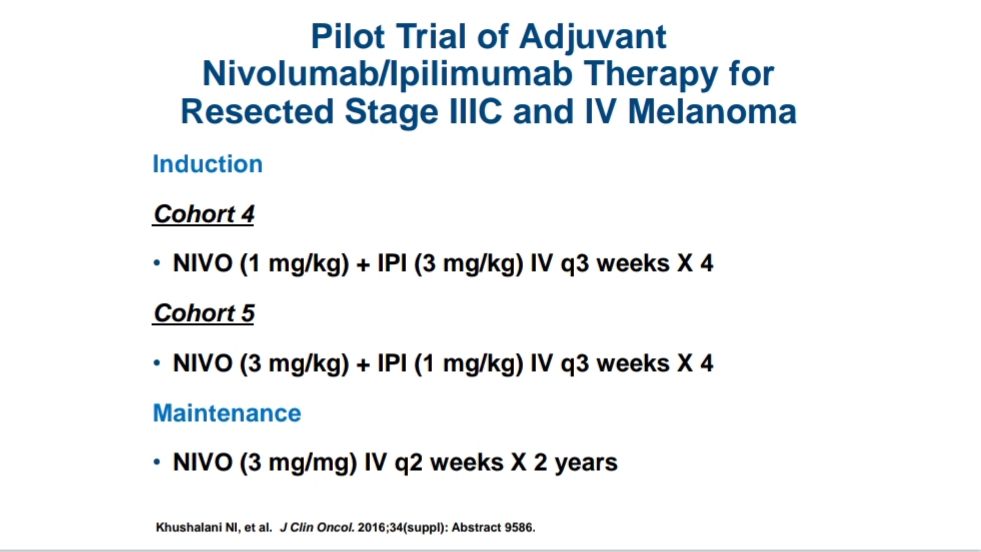


Forgive the blurry slides I've reproduced here.  Check the link at the top to view them for yourselves.  Hope this helps.  We've come a long way, though we have further to go.  Coming soon - the furture of immunotherapy for cancer....
Ratties rock! - c

Thursday, September 28, 2017

Ooops! Opdivo (Nivolumab), did it again...this time it's approved for Liver Cancer


To back up a bit...here's some history, Opdivo style:

2014 - Opdivo (previously known as ONO4538, then MDX1106 [as it was called when I first started taking it], then BMS936558, then Nivolumab, and finally...Opdivo...dun, da, da dun!!!!) was approved for advanced melanoma patients after they had failed ipi and, if BRAF positive, BRAFi as well.
2015 - Opdivo was approved as a first line drug for unresectable or advanced melanoma, BUT....you had to be BRAF positive - though there was an abundance of data demonstrating that BRAF status made no difference!!!
2015 - also saw Opdivo approved for use in advanced renal cell carcinoma as well as non-squamous and non-small cell lung cancer, after platinum based chemo.
2016 - FINALLY,  Opdivo was approved for use alone or with ipi, in advanced melanoma patients, no matter BRAF status.

Now....

Bristol-Myers Squibb’s Opdivo® (nivolumab) Receives FDA Approval for the Treatment of Hepatocellular Carcinoma Patients Previously Treated with Sorafenib

That's all great news.  The more help provided to cancer peeps the better!!  NOW!!! How bout seeking approval for folks with Stage III melanoma, hmmmmmm???  I think we ratties have more than provided the needed data....with this research pretty much saying it all:  Nivo better than ipi as adjuvant treatment for melanoma! Surprise, surprise, surprise!!! 

Check out the link...or....here it is in a nutshell:

Stage IIIB, C, or Stage IV melanoma patients were allowed...even those with brain mets...as long as all were completely resected.

Patients joined from March 2015 to November 2015

There was a 5% cutoff for PD-L-1 staining (ie positive for PD-L-1 staining on tumors)

Nivo was given at 3mg/kg every 2 weeks or ipi was given at 10/mg/kg every 3 weeks for 4 doses then every 12 weeks.  Either drug was given for one year.

Patients were assessed via CT's of body and MRI of the brain every 12 weeks for 2 years, then every 6 months until year 5.

905 patients were studied, none of whom were still getting the drug by the final report.
Only 397 of these patients completed the full year of drug treatment.
Of the 452 in the nivo arm, 275 completed the year.  Of the 453 in the ipi arm, 122 completed.

Nivo outcomes were better than ipi no matter the patient's age, sex, disease stage, or BRAF status.  Nivo had fewer side effects.

In prior studies, ipi has demonstrated a pretty consistent 60% recurrence free survival in Stage III NED patients when used as adjuvant.  That number held in this study even when Stage IV patients were included.

Recurrence free survival at 12 months:
70.5% for nivo                    60.8% for ipi

Recurrence free survival at 18 months:
66.4% for nivo                    52.7% for ipi

Median distant metastasis free survival was not reached in either group.  However, it was longer in the nivo group with mets developing in 93 of the 369 peeps in the nivo group and in 115 of the 366 ipi group.

OVERALL recurrence free survival was 70.5% for the nivo group (vs 60.8% for ipi) at 1 year...but...when you pull out the Stage IV folks the number was 63% for nivo vs only 57% for ipi.

Call it by any name you like, BMS!  Let's get THIS approval DONE!!! - c

Sunday, January 24, 2016

Nivo/Opdivo now first line for ALL melanoma patients! BRAF positive or negative! Alone or with ipi!


FDA expands Nivolumab as first line for V600 BRAF positive patients!

In 2014, Nivo was FDA approved for use in advanced melanoma after patients had failed ipi and if BRAF positive, the BRAF inhibitors as well. In November of 2015, it gained additional approval for use as a first line drug for melanoma patients!!  BUT only if you were BRAF V600 wild type!!!!  This, in spite of numerous studies demonstrating that the response to anti-PD1 (Nivo or Pembro, actually) was the same no matter BRAF status! Here's a link with the history of Nivo/Opdivo approvals!

Now!  Check out the link at the very top. FINALLY! In all its wisdom, the FDA has recognized the results of the Checkmate-067 study in which patients treated with the nivo/ipi combo had "a reduced risk of progression by 58% compared with ipi alone in patients with advanced melanoma" while nivo alone "reduced risk of progression by 43% vs ipi" and whose outcomes for Nivo's use as a single agent or in combination with ipi were similar NO MATTER the patient's BRAF status.

Basics of the study:  945 untreated unresectable melanoma patients.  They were treated with:  Nivo 3mg/kg q 2 wks (n=316).  Ipi 3mg/kg every 3 wks (315). Ipi/nivo combo with nivo at 1mg/kg with ipi at 3mg/kg every three wks for 4 doses followed by nivo at 3mg/kg alone q2wks (314).

At 9 months:  Median PFS = 11.5 mo for combo, 6.9 mo for nivo, 2.9 mo for ipi.

PD-L1 positive patients  - PFS of 14 mo for both nivo arms vs 3.9 mo with ipi only.
PD-L1 negative patients - combo was better than single agent - with PFS of 11.2 mo with combo vs 5.2 mo with nivo alone and 2.8 mo with ipi alone.

Overall response rate:  50% with combo.  40% for nivo alone.  14% for ipi alone.
Complete response rate:  8.9% for combo. 8.5% for nivo alone.  1.9% for ipi alone.
BRAF mutant melanoma:  For combo median PFS = 11.7 months.  For nivo alone PFS = 5.6 mo.  For ipi PFS = 4 months.
BRAF wild-type:  For combo median PFS = 11.2 months.  For nivo alone PFS = 7.9 mo.  For ipi PFS = 2.8 months.

Most common side effects were the usual players:  diarrhea, colitis, increased lipase and ALT/AST levels....all to a greater extent with the combo.

Then today in the UK  there was this: Opdivo approved for advanced melanoma in England and Wales (although it is still not approved for NSC lung cancer there, yet).

About bloody time!!!!  NOW!!!!  Let's get some more approvals for Stage III/IV NED folks, shall we?????
Big thanks to Eric for finding and sharing!!  He beat B on this one!!!  - c

Saturday, April 2, 2022

FDA approves Relatlimab plus Nivolumab (Opdivo) for advanced melanoma patients - the down and dirty on Opdualag!!!!


Finally, an additional FDA approved treatment for melanoma!!  With FDA approvals for the first immunotherapy and targeted therapy in melanoma in 2011, the addition of Nivo and Pembro in 2014, a few additional BRAF/MEK combo's in 2013 and 2018, T-VEC approved as an intralesional in 2015, immunotherapy approved as adjuvant in 2017, targeted as such in 2018 - that's been about it for new melanoma therapies.  I recently reported on study results for Relatlimab combined with Nivolumab (Opdivo) for treatment of advanced melanoma in February:  Relatlimab plus Nivolumab in advanced melanoma patients - better than Nivo (Opdivo) alone!  The main take-away from the data being:

1.  The combination of the anti-LAG-3 product relatlimab with anti-PD-1 agent Nivolumab provided better progression free survival than when melanoma patients with advanced disease were treated with nivo alone - "The median progression-free survival was 10.1 months (6.4 to 15.7) with relatlimab-nivolumab as compared with 4.6 months (3.4 to 5.6) with nivolumab. Progression-free survival at 12 months was 47.7% (41.8 to 53.2) with relatlimab-nivolumab as compared with 36.0% (30.5 to 41.6) with nivolumab. Progression-free survival across key subgroups favored relatlimab-nivolumab over nivolumab."

2.  Nivo and Pembro when used as single agents are both known (through data collection over many years) to have an approximate response rate of 40%.  The second article in the link above addressing relatlimab combined with nivo notes (though tallied as PFS):  "Median progression-free survival was 10.1 months in the combination arm and 4.6 months in the monotherapy arm. After 12 months’ follow-up, progression-free survival rates were 47.7% in the combination arm versus 36% in the monotherapy arm..."  The ipi/nivo combo is recognized to have a response rate of 50%+.  The fourth article in this 2021 post - ASCO 2021 - Outcomes of treatments on advanced disease - Reasons for HOPE!!!!! - notes:  "In the phase 3 CheckMate 067 trial, a durable and sustained clinical benefit was achieved with nivolumab (NIVO) + ipilimumab (IPI) and NIVO alone vs IPI at 5-y of follow-up (overall survival [OS] and progression-free survival [PFS] rates: 52%, 44%, 26% and 36%, 29%, 8%, respectively)."  But, we know that PFS and OS is higher earlier on after treatment, so in the first article from this 2017 report - Do melanoma peeps with side effects to immunotherapy have a better response? - it notes:  " The 3-year OS rate of 63% is the highest observed for this patient population and provides additional evidence for the durable clinical activity of immune checkpoint inhibitors in the treatment of advanced melanoma."

3.  Though the combo had greater side effects than when nivo was taken alone - "Grade 3 or 4 treatment-related adverse events occurred in 18.9% of patients in the relatlimab-nivolumab group and in 9.7% of patients in the nivolumab group."  - we know that about 40% of patients on ipi/nivo have to stop the combo due to side effects, with about 55% experiencing grade 3/4 adverse events. 

4.  This post reviewed the Relativity trial of relatlimab and nivo in 2021 - Something "new" in melanoma treatment???? Anti-LAG-3! Again....  Despite the new data and having been reporting on anti-LAG-3 since 2014, I think my summation there still stands:

My take:  It seems that the combination of relatlimab and nivolumab (Opdivo) has a response rate that is slightly less than that of the ipi/nivo (Ipilimumab/Yervoy and Nivolumab/Opdivo) combo which has proven to be around 50+ percent, but one that is possibly better than the 40% response rate when anti-PD-1 (nivo or pembro) is used alone. Perhaps the two most important things these (still preliminary - after all these years) reports tell us is that ~

1.  Side effects, that can be so devastating and difficult in the ipi/nivo combo may be much decreased in the relatlimab/nivo combo.

2.  For reasons we don't fully understand, melanoma responds differently to the same treatment in different folks.  For me, thus far, nivolumab alone was 100% effective.  Obviously that is not the case for most melanoma patients.  So having another effective immunotherapy combination, that may well be far less than 100% effective in all of us, may still be completely effective in some.

And, finally, as ever - the drug company did not see fit to configure the trial such that the new combo went up against the old one directly.  Why not BMS?  Why not????  Why not three arms?  One with nivo alone.  One with the ipi/nivo combo? And the third with relatimab/nivo?  WHY???

5.  We still don't have durability of response data to this combo - but I would presume (given the durability we know about responses to nivo) they would be good.

SOooooooooooooooo - there you have it - a newly FDA approved combo for melanoma dubbed - OPDUALAG!!!!  (Seriously, these names!  My word!)

Now, this:

FDA Approves Relatlimab Plus Nivolumab for Unresectable or Metastatic Melanoma


An updated "Primer of Melanoma Treatments" to be posted soon.  Hang tough, peeps! - c

Wednesday, November 25, 2015

Nivo/Opdivo approved as first line for melanoma!


Nivolumab/Opdivo (the drug I took in my trial) has gained FDA approval for use as a single agent, front line treatment for BRAF V600 wild type, unresectable or metastatic melanoma according to announcements put out today! 
Curetoday.com: FDA approves frontline opdivo for advanced melanoma
And here:  Streetinsider.com: FDA Approval of Opdivo in BRAF V600 WT Melanoma

Have to say, I don't like the limitation based on BRAF status...since we already know that such status doesn't matter in terms of a response to anti-PD1:  Nivo/Opdivo effective no matter BRAF status
The restriction in today's announcement is based on the way the data was attained from the study used to gain this approval, the CheckMate 066 trial.  (The narrow way in which trials are used when drug companies gain approval from the FDA is a HUGE problem.  Human brains are not so narrow as to only be able to interpret data in specific, grouped sets! We really are capable of putting two and two together and while Opdivo proved effective in the wild type ratties in the 066 study, we have simultaneously learned that other ratties respond as well.  Tunnel vision is NOT required!) But, this approval gives one more option for lots of melanoma peeps and as more and more Opdivo approvals are gained, the more latitude docs will have in the way they prescribe it.

Here's some more ways Opdivo has been approved and is helping others:
  • Advanced renal cell carcinoma (11/23/2015)
  • Advanced non-squamous non-small cell lung cancer - after platinum based chemo (10/9/2015)
  • In the Nivo/Opdivo with Ipililmumab/Yervoy combo for BRAF V600 advanced melanoma (10/1/2015)
  • Advanced non-small cell lung cancer - after platinum based chemo (3/4/2015)
  • For melanoma, after failing ipi, and if BRAF positive, BRAFi (12/22/14) 
Additionally, Nivo/Opdivo has shown high response rates (87%) for relapsed or refractory Hodgkin Lymphoma.  Studies are currently looking at Opdvo combined with the anti-CD27 antibody, Varlilumab as well as Opivo/Yervoy combined with GM CSF (sargramostim) for melanoma.

NOW!  Let's see Opdivo approved for BRAF positive folks....FIRST line!!!  We've got ipi, a more toxic, less effective drug in melanoma...though a huge boon for folks who need it...approved for NED melanoma folks.  Let's get Nivo/Opdivo approved for the NED melanoma patients.  My ratties have proven its worth!!  Tunnel vision with FDA approvals is silly, non-nonsensical, and patients with deadly illnesses die while bureaucrats fail to put 2 and 2 together!!

Hang in there, ratties!  Slowly but surely, you are changing the world! love, c

Tuesday, June 29, 2021

ASCO 2021 - NEOadjuvant treatments - immunotherapy vs targeted and nivo plus relatlimab (anti-LAG3)

Having covered adjuvant therapy yesterday, today I turn to NEOadjuvant treatments.  In 2018 I wrote -

"Adjuvant therapy, is when a treatment is given AFTER signs of obvious disease have been removed, usually with surgery.  And we have very good data that adjuvant treatments, both with targeted and immunotherapy, work in melanoma to prevent progression in many of those patients.  After all, that is what the NED Stage IV ratties in my nivo trial proved from 2010 - 2013!!!!  NEO-adjuvant therapy, is when a treatment is given BEFORE melanoma has been removed. "

Here are a zillion Neoadjuvant reports.  Now, there are these:

Pathological response and survival with neoadjuvant therapy in melanoma: a pooled analysis from the International Neoadjuvant Melanoma Consortium (INMC).  Menzies, Amaria, Rozeman, et al.  Nat Med.  Feb 2021.

The association among pathological response, recurrence-free survival (RFS) and overall survival (OS) with neoadjuvant therapy in melanoma remains unclear. In this study, we pooled data from six clinical trials of anti-PD-1-based immunotherapy or BRAF/MEK targeted therapy. In total, 192 patients were included; 141 received immunotherapy (104, combination of ipilimumab and nivolumab; 37, anti-PD-1 monotherapy), and 51 received targeted therapy. A pathological complete response (pCR) occurred in 40% of patients: 47% with targeted therapy and 33% with immunotherapy (43% combination and 20% monotherapy). pCR correlated with improved RFS (pCR 2-year 89% versus no pCR 50%) and OS (pCR 2-year OS 95% versus no pCR 83%). In patients with pCR, near pCR or partial pathological response with immunotherapy, very few relapses were seen (2-year RFS 96%), and, at this writing, no patient has died from melanoma, whereas, even with pCR from targeted therapy, the 2-year RFS was only 79%, and OS was only 91%. Pathological response should be an early surrogate endpoint for clinical trials and a new benchmark for development and approval in melanoma.

Hmmm....  While targeted therapy is almost magical in BRAF positive melanoma peeps for melting away tumors and those responses have proven at times to be durable, that durability can be fickle.  This report (while not necessarily about neoadjuvant administration) is similarly illuminating:

First-line immunotherapy versus targeted therapy in patients with BRAF-mutant advanced melanoma: a real-world analysis.  Pavlick, Zhao, Lee, et al.  Future Oncol. Feb 2021.

Aim: To compare effectiveness of nivolumab + ipilimumab (NIVO + IPI) versus BRAF + MEK inhibitors (BRAFi + MEKi) in patients with BRAF-mutant advanced melanoma in the real-world setting. 

Materials & methods: This study used the Flatiron Health electronic medical record database. Results: After adjusting for differences in baseline characteristics, NIVO + IPI was associated with a 32% reduction in risk of death versus BRAFi + MEKi. At a mean follow-up of 15-16 months, 64% of NIVO + IPI patients and 43% of BRAFi + MEKi patients were alive; subsequent therapy was administered to 33 and 41% of patients, respectively. After first-line NIVO + IPI, 20% of patients died before subsequent therapy, whereas 32% died after first-line BRAFi + MEKi. 

Conclusion: In this real-world study, patients treated with first-line NIVO + IPI showed significant survival benefit versus those receiving first-line BRAFi + MEKi.

Then there's this, from ASCO....

Neoadjuvant and adjuvant nivolumab (nivo) with anti-LAG3 antibody relatlimab (rela) for patients (pts) with resectable clinical stage III melanoma.  Amaria, Postow, Tetzlaff, et al.  ASCO 2021

Background:  Neoadjuvant therapy (NT) for pts with clinical stage III melanoma remains an active area of research interest. Recent NT trial data demonstrates that achieving a pathologic complete response (pCR) correlates with improved relapse-free (RFS) and overall survival (OS). Checkpoint inhibitor (CPI) NT with either high or low dose ipilimumab and nivolumab regimens produces a high pCR rate of 30-45% but with grade 3-4 toxicity rate of 20-90%. In metastatic melanoma (MM), the combination of nivo with rela (anti Lymphocyte Activation Gene-3 antibody) has demonstrated a favorable toxicity profile and responses in both CPI-naïve and refractory MM. We hypothesized that NT with nivo + rela will safely achieve high pCR rates and provide insights into mechanisms of response and resistance to this regimen.

Methods:  We conducted a multi-institutional, investigator-initiated single arm study (NCT02519322) enrolling pts with clinical stage III or oligometastatic stage IV melanoma with RECIST 1.1 measurable, surgically-resectable disease. Pts were enrolled at 2 sites and received nivo 480mg IV with rela 160mg IV on wks 1 and 5. Radiographic response was assessed after completion of NT; surgery was conducted at wk 9 and specimens were assessed for pathologic response per established criteria. Pts received up to 10 additional doses of nivo and rela after surgery, with scans every 3 mo to assess for recurrence. The primary study objective was determination of pCR rate. Secondary objectives included safety, radiographic response by RECIST 1.1, event-free survival (EFS), RFS, and OS analyses. Blood and tissue were collected at baseline, at day 15, day 28, and at surgery for correlative analyses.

Results:  A total of 30 pts (19 males, median age 60) were enrolled with clinical stage IIIB/IIIC/IIID/IV (M1a) in 18/8/2/2 pts, respectively. 29 pts underwent surgery; 1 pt developed distant metastatic disease while on NT. pCR rate was 59% and near pCR ( less than10% viable tumor) was 7% for a major pathologic response (MPR, pCR + near pCR) of 66%. 7% of pts achieved a pPR (10-50% viable tumor) and 27% pNR (greater than/= to 50% viable tumor). RECIST ORR was 57%. With a median follow up of 16.2 mos, the 1-year EFS was 90%, RFS was 93%, and OS was 95%. 1-year RFS for MPR was 100% compared to 80% for non-MPR pts. There were no treatment related gr 3/4 AEs that arose during NT; 26% of pts had a gr 3/4 AE that began during adjuvant treatment.

Conclusions:  Neoadjuvant and adjuvant treatment with nivo and rela achieved high pCR and MPR rates with a favorable toxicity profile in the neoadjuvant and adjuvant settings. Pts with MPR had improved outcomes compared to non-MPR pts. Translational studies to discern mechanisms of response and resistance to this combination are underway. Clinical trial information: NCT02519322.

Perhaps neoadjuvant care will become the way of the future.  Thanks ratties.

best - c

Wednesday, June 1, 2016

ASCO 2016 - Two Adjuvant studies for Stage III/IV - with interferon vs pembro vs ipi - still recruiting

Knowing, as we do, that ALL melanoma therapies work best with the lowest possible tumor burden and as a person who was Stage IV post brain and lung mets in 2010, rendered NED after having my brain zapped and upper lobe of my lung removed, I was the lucky beneficiary of an adjuvant nivo trial in which I was dosed for 2 1/2 years and remain NED today!!!  (See my trial's results and other reports on adjuvant treatment below.)  Therefore, all I can say about this is:  It's about damn time and they need to leave interferon out of the mix!!!!!!!!!!!  Just say'n! Though a person looking to participate in this study was told...and passed on to me...that if you got the interferon arm, they would allow you to move off that to either ipi or pembro....cause the ipi arm did, in fact, get included.


SWOG S1404: A phase III randomized trial comparing standard of care adjuvant therapy to pembrolizumab in patients with high risk resected melanoma.  ASCO 2016.  # e21032.  J Clin Oncol 34, 2016.  Grossmann, Othus, Tarhini, et al.
Background: With the recent FDA approval of ipilimumab, the treatment options available to patients with high risk resected melanoma has changed. Now, reasonable treatment choices include high dose interferon, ipilimumab dosed at 10 mg/kg, and pegylated interferon. Among these treatments, HDI remains the only treatment to show an overall survival benefit in randomized trials. With the high response rates, and relatively low toxicity profile seen in the treatment of Stage IV melanoma with pembrolizumab, investigation of this agent in stage III patients is a critical priority. S1404 is a randomized trial comparing standard of care HDI to pembrolizumab in patients at high risk for recurrence and death after surgery. Methods: Patients age 18 or greater with Stages IIIA(N2), IIIB, IIIC and IV (M1a, b and c) are eligible. Patients with brain metastasis will be excluded. At entry, patients must have had complete staging and adequate surgery to render them free of melanoma including completion lymph node dissection for those with sentinel lymph node positive disease. Prior therapy with PD-1 blockade or interferon are not allowed. Two treatment arms are assigned based on stratification by stage and PD-L1 staining status (positive vs negative vs unknown). Patients (n = 1,378) will be randomized 1:1 to either 1) interferon Alfa-2b 20 MU/m2/days 1-5 weeks 1-4, followed by Interferon Alfa-2b 10 MU/m2/d SC days 1,3,5weeks 5 -52, or 2) pembrolizumab 200 mg day 1, q 3 weeks for 52 weeks. Efficacy will be measured in terms of both overall survival and relapse free survival, with interim analyses planned for both endpoints at 50% OS information. Safety, pharmacokinetics, and quality of life data will also be studied. Results: As of January 29, 2016, 36 sites are registered, 29 patients are in screening, and 13 patients randomized. An amendment to include 10 mg/kg ipilimumab as a treatment option is under review and will be described at the annual meeting. 

Adjuvant nivolumab (NIVO) plus ipilimumab (IPI) for resected high-risk stages IIIC/IV melanoma (MEL).  ASCO 2016. # 9586.  J Clin Oncol 34, 2016.  Khushalani, Kim, Gibney, et al.

Background: Patients (pts) with resected stage IIIC or IV melanoma are at very high-risk for recurrence and effective strategies for adjuvant therapy are needed. Combination NIVO + IPI yields high response rates but has a high rate of grades (G) 3-4 toxicities in advanced MEL. We examined the safety and efficacy of 2 dosing schedules of NIVO + IPI in resected stage IIIC and IV MEL pts. Methods: Resected stage IIIC/IV MEL pts who were free of disease, with adequate laboratory indices and performance status of 0-1 were treated with NIVO (1mg/kg) + IPI (3mg/kg) Q3 weeks X 4 doses (induction) followed by 2 years of NIVO at 3mg/kg Q2 weeks (Cohort A). Toxicities observed during induction led to opening of cohort B consisting of NIVO (3mg/kg) + IPI (1mg/kg) Q3 weeks X 4 doses followed by the same maintenance. Pre-defined criteria permitted initiation of NIVO maintenance following recovery from induction toxicity in both cohorts. Results: Twenty pts were treated in each cohort. Median age was 50 (22-78) in cohort A and 55 (29-77) in cohort B; stage IIIC pts constituted 65% and 60% of the respective cohorts. Toxicity precluded completion of all 4 induction doses in 50% in cohort A (most common was G3-4 ↑ AST and/or ALT in 7 pts) and 35% in cohort B. The most common G3-4 toxicities (minimum 5 events) are listed in the table. Hypophysitis developed in 28% (7 pts in cohort A). The incidence of ↑ AST/ALT, nausea, anorexia, cough, weight loss, neurotoxicity & endocrine toxicity was significantly higher in cohort A. In this group, 5 pts (25%) completed all induction doses and remain on NIVO maintenance; in group B, this number was 40%. There have been 4 relapses in cohort A, and 3 in cohort B. Only 1 pt in this high-risk study group has succumbed to MEL recurrence. At median follow-up of 21.3 months and 11 months respectively for the two cohorts, the median progression-free survival and overall survival have not been reached. Conclusions: In very high-risk resected MEL, adjuvant NIVO + IPI followed by maintenance NIVO has encouraging activity. Dosing per cohort B appears better tolerated and warrants further study. Clinical trial information: NCT01176474

A (n = 20)
B (n = 20)
↑ Lipase
8
6
↑ ALT / AST
8 / 5
1 / 1
↑ Glucose
2
4
↑ Amylase
3
3
Colitis
3
2
Vomiting
1
4

Here's a post from 2015 that includes the reports from my study as well as one using ipi as adjuvant:  What to expect in Ipi vs Nivo Trial as adjuvant for resected melanoma???

Another post discussing BRAFi as adjuvant:   BRAFi as neoadjuvant

And here is a bit of an op-ed I wrote regarding adjuvant care with links within:  Adjuvant treatment in melanoma-limited options

Wishing my best to you all! - c