Showing posts sorted by date for query prednisone and immunotherapy. Sort by relevance Show all posts

Tuesday, September 14, 2021

What to do about immunotherapy if you - take steroids or infliximab for side effects? Have a pre-existing autoimmune disease?????

 Okay.  This post is A LOT!!!  

Clearly steroids are potent medications that NOBODY should take lightly.  Steroids should NOT be administered if you have a cold - a sore joint - or lots of things medical providers use them for far too frequently.  However, when they are truly needed and dosed appropriately, they can not only save lives, but make life much more livable.  Back in the day, docs thought that if you took steroids while on immunotherapy you would defeat that entire purpose and fail to gain a beneficial response from that therapy.  WRONG!!!!  Again, these drugs should be taken only when they are absolutely needed!  But, given the unfortunate side effects that can be caused by immunotherapy, steroids and other immunosuppressive drugs are often required in order to deal with life threatening side effects, enable the continuance of life saving therapy and we've learned - those patients CAN ATTAIN A GOOD RESPONSE!!!  Here are a zillion articles:  Steroids and immunotherapy

Now, there's this:

Early use of high-dose-glucocorticoid for the management of irAE is associated with poorer survival in patients with advanced melanoma treated with anti-PD-1 monotherapy.  Bai, Hu, Warner, et al.  Clin Cancer Res.  August 2021.

Background: Programmed cell death receptor-1 (PD-1) inhibitors are front-line therapy in advanced melanoma. Severe immune-related adverse effects (irAEs) often require immunosuppressive treatment with glucocorticoids (GCCs), but GCC use and its correlation with patient survival outcomes during anti-PD-1 monotherapy remains unclear.

Methods: In this multicenter retrospective analysis, patients treated with anti-PD-1 monotherapy between 2009 and 2019 and detailed GCC use data were identified from five independent cohorts, with median follow-up time of 206 weeks. IrAEs were tracked from the initiation of anti-PD-1 until disease progression, initiation of a new therapy, or last follow-up. Correlations between irAEs, GCC use, and survival outcomes were analyzed.

Results: Of the entire cohort of 947 patients, 509(54%) developed irAEs. In the MGH cohort (irAE(+)n=90), early-onset irAE (within 8 weeks of anti-PD-1 initiation) with high-dose-GCC use ({greater than or equal to}60mg prednisone equivalent qd) was independently associated with poorer post-irAE PFS/OS compared to irAE without early-high-dose-GCC use. These findings were validated in the combined validation cohort. Similar findings were also observed in the 26-week landmark analysis for post-irAE-PFS but not for post-irAE-OS. A sensitivity analysis using accumulated GCC exposure as the measurement achieved similar results.

Conclusions: Early high-dose-GCC use was associated with poorer PFS and OS after irAE onset. Judicious use of GCC early during anti-PD-1 monotherapy should be considered. Further prospective randomized control clinical trials designed to explore alternative irAE management options are warranted.

Given the title of this article and the data included in the abstract this sounds pretty bad!  The authors indicate that the folks who had high dose steroids early in their treatment did not do as well as those who did not take steroids.  HOWEVER!!!!!!!!!!!!!!  Thanks to having super duper friends who can gain access to the whole enchilada (ie the entire report) like my Edster - here's some very important information that the title and abstract fail to share:

"We further tested the correlation between irAEs that led to the use of high-dose-GCC and post irAE OS.  Notably, in the 8-week landmark analysis, irAEs that led to high-dose-GCC were associated with poorer post-irAE OS in both cohorts.  For patients with and without high-dose-GCC associated within 8 weeks after anti-PD-1 monotherapy...."

"In the 26-week landmark analysis, marginal significant negative correlation between high-dose-GCC associated irAEs and post-irAEs OS was only observed in the MGH exploratory cohort but not in the combined validation cohort."

"The major limitation of this study is that it is a retrospective analysis, making it susceptible to potential selection, measurement, and reporting biases.  Although we used objective measurements for most cases, those biases cannot be entirely excluded.  Over half of the irAEs that led to early use of high-dose-GCC also led to the early discontinuation of anti-PD-1 monotherapy, which may contribute to the poorer survival."

YOU THINK???????  Oh! EMMMM!  Geeeee!!!!  Yet you research peeps felt just fine giving it the title you did.  Wowsers!!!  

Do I think it is good to take steroids in the midst of immunotherapy?  No.  Because that means you are having trouble tolerating the very thing you are taking - Not for fun.  Not to look cute.  Not because you don't have anything better to do with your time - BUT TO SAVE YOUR LIFE!!!!  And if we can't tolerate the thing we need to kill melanoma before it kills us - then we have a problem!!!  A big one!  If we had a way to enable those with serious side effects to tolerate therapy without steroid use - that would be great!!!  Many researchers are working on drugs that can be combined with immunotherapy that will help diminish side effects as we currently know them.  Hopefully, that research will find options soon.  Still, if I were queen of the world, I would make a great deal more use of flexible dosing schedules for folks with side effects.  For instance - in my Phase 1 trial back in 2010 - my cohort was given nivolumab (Opdivo) at only 1mg/kg and we did pretty well!!!!  Granted, the cohort after me was treated with 3mg/kg and the next was given 10mg/kg.  For those of you who aren't aware - phase 1 trials are actually simply dosing studies.  They are not created to see response rates and such.  Nope.  Just how much drug can you take without growing three heads!!!  And, indeed - we found that those treated with the most nivo did best, but they also had the most side effects.  That's how we ended up with what is the roughly 3mg/kg dose we use today.  BUT, that  pretty much proves my point, doesn't it?  If folks can't tolerate the full dose without impossible side effects, why not see if they can tolerate a lesser one?

Now - what happens to those for whom steroids do not do enough to control their side effects and require infliximab?

Clinical outcomes of patients with corticosteroid refractory immune checkpoint inhibitor-induced enterocolitis treated with infliximab.  Alexander, Ibraheim, Sheth, et al.  J Immunother Cancer.  Jul 2021.

Introduction: Immune checkpoint inhibitors (CPIs) have changed the treatment landscape for many cancers, but also cause severe inflammatory side effects including enterocolitis. CPI-induced enterocolitis is treated empirically with corticosteroids, and infliximab (IFX) is used in corticosteroid-refractory cases. However, robust outcome data for these patients are scarce.

Methods: We conducted a multicenter (six cancer centers), cohort study of outcomes in patients treated with IFX for corticosteroid-refractory CPI-induced enterocolitis between 2007 and 2020. The primary outcome was corticosteroid-free clinical remission (CFCR) with Common Terminology Criteria for Adverse Events (CTCAE) grade 0 for diarrhea at 12 weeks after IFX initiation. We also assessed cancer outcomes at 1 year using RECIST V1.1 criteria.

Results: 127 patients (73 male; median age 59 years) were treated with IFX for corticosteroid-refractory CPI-induced enterocolitis. Ninety-six (75.6%) patients had diarrhea CTCAE grade greeater than 2 and 115 (90.6%) required hospitalization for colitis. CFCR was 41.2% at 12 weeks and 50.9% at 26 weeks. In multivariable logistic regression, IFX-resistant enterocolitis was associated with rectal bleeding and absence of colonic crypt abscesses. Cancer non-progression was significantly more common in patients with IFX-resistant enterocolitis (64.4%) as compared with patients with IFX-responsive enterocolitis (37.5%).

Conclusion: This is the largest study to date reporting outcomes of IFX therapy in patients with corticosteroid-refractory CPI-induced enterocolitis. Using predefined robust endpoints, we have demonstrated that fewer than half of patients achieved CFCR. Our data also indicate that cancer outcomes may be better in patients developing prolonged and severe inflammatory side effects of CPI therapy.

This is not the first time that researchers have found that folks with side effects - particularly vitiligo, rashes and colitis - are associated with good melanoma outcomes:

From 2017 ~ Do melanoma peeps with side effects to immunotherapy have a better response? - Side effects of immunotherapy - Part 10!!!

From earlier this year ~ This stuff is still weird - Side effects to immunotherapy - Part 11! Heart problems, diabetes, arthritis - Oh MY!!! BUT!!! Colitis may be associated with a favorable response!!!!

Interesting, no?  Now, if you have had a bad reaction to immunotherapy can you resume that therapy?

Response to immune checkpoint inhibitor rechallenge after high-grade immune related adverse events in patients with advanced melanoma.  Shah, Punekar, Pavlick.  Melanoma Res. Jun 2021.

Twenty to sixty percent of patients receiving immune checkpoint inhibitors (ICIs) experience high-grade immune-related adverse events (irAEs) which may prevent the continuation of treatment. Limited clinical evidence is available to guide treatment for these patients. Patients with stage IV or unresectable stage III melanoma at NYU Langone Health were reviewed from 1 January 2014 to 1 July 2019. Patients with first-line ICI systemic therapy, a high-grade irAE and a rechallenge with ICI therapy were included. Postrechallenge irAE recurrence, response rate, overall survival (OS) and progression-free survival (PFS) were evaluated. Postrechallenge irAEs recurred in 71.9% (n = 23/32) of patients at a median of 5.1 weeks from rechallenge, with 46.9% (15/32) recurring as high-grade events. Clinical response was achieved in 46.9% (15/32) of patients, including 40.6% (13/32) with a complete response and 6.3% (2/32) with partial response. Median OS from first ICI initiation was 85.4 weeks (45.7-140.7) and median PFS was 42.9 weeks (29.2-114.2). Patients with a shorter time to initial irAE and shorter time to postrechallenge irAE were at greater risk for disease progression. Those with greater duration to rechallenge (greater than 10 weeks) were at lower risk for disease progression. ICI rechallenge can be considered in patients with advanced melanoma, as the risk-benefit profile appears favorable. Treatment toxicity should be appropriately managed, as longer durations to rechallenge may lower the risk of disease progression.

That last sentence circles back to my conclusion to the first article (as well as that of the authors within the report) in that the longer we can keep folks on therapy, the better they do.  So, if we can control side effects and allow patients to stay on therapy - even if steroids are required - they are less likely to experience progression of their melanoma!  Further, if folks have to stop immunotherapy due to side effects - can they return to that therapy?  There is this from 2017:  Melanoma patients continuing Nivo after having adverse reactions to the ipi/nivo combo??? Yes, you can!

I would suggest that this would be the time to seek the care of a melanoma specialist if you aren't managed by one already.  After all, these side effects don't play and resuming that which caused you harm should be done with great care!

Finally, what if you have an autoimmune disease at the start????

Safety and Clinical Outcomes of Immune Checkpoint Inhibitors in Patients With Cancer and Preexisting Autoimmune Diseases.  Yeung, Kartolo, Holstead, et al.  J Immunother. Jun 2021.

Immunotherapy has revolutionized treatment outcomes in numerous cancers. However, clinical trials have largely excluded patients with autoimmune diseases (ADs) due to the risk of AD flares or predilection for developing organ-specific inflammation. The objective of this study was to evaluate the safety and efficacy of immunotherapy in patients with cancer and preexisting ADs. A retrospective, single-center study of patients with cancer initiated on immune checkpoint inhibitors between 2012 and 2019 was conducted. The primary outcome was the development of immune-related adverse events (irAEs) with respect to the presence of AD at baseline. Associations were assessed using Kaplan-Meier curves, bivariate and multivariable analyses. Of the 417 patients included in this study, 63 patients (15%) had preexisting ADs. A total of 218 patients (53%) developed at least 1 irAE. There was no association between the presence of baseline AD on the development, grade, or number of irAEs; time to irAE or irAE recovery; systemic corticosteroid or additional immunosuppressant treatment for irAEs; permanent treatment discontinuation; or overall response rate. Two smaller cohorts were studied, melanoma and non-small cell lung cancer, and there was no effect of baseline AD on overall survival on either cohort. However, a greater proportion of patients with baseline ADs had full recovery from their irAE. Furthermore, age below 65, baseline steroid use, and single-agent immunotherapy regimens were protective in terms of the development of irAEs. Our study suggests that immune checkpoint inhibitors have similar safety and efficacy profiles in patients with preexisting ADs.

"...immune checkpoint inhibitors have similar safety and efficacy profiles in patients with preexisting autoimmune diseases."  That is a heartening sum-up!  A dear one, Jubes on the MRF patient forum, had to take infliximab due to debilitating arthritis - which helped her a great deal and did not cause an adverse flare of her melanoma.  This report was written in her honor, but includes many links to articles that address the particulars of folks with pre-existing immune conditions as well as the other points I am covering today:  For Jubes...and the rest of us!!! An anti-rheumatic drug that increases the effect of vemurafenib and selumetinib????

Immunotherapy has been a great blessing in melanoma world.  However, it is not for sissies!  Hope this helps.  Wishing you all my best.  - c

Sunday, June 24, 2018

Art, information and hope!!! ~ Sketching My Way Through Metastatic Melanoma - by Eleanor Segal


Gotta say!  Folks with melanoma are some of the most amazing peeps I have ever known!!  I am blessed to have come to know so many incredible melanoma friends.  I am very lucky to have Ellie as a dear one for some time.  Not only is she a melanoma superhero, she is a talented artist, and author!!!

Ellie has certainly paid her melanoma dues, from a primary on her thigh in 1989 to abdominal mets in 2013 followed by surgeries, a zillion scans, IL-2. Yervoy, Opdivo, BRAF/MEK, side effects...AND....DRUM ROLL PLEASE ~ NED per last scans in May of 2018!!!  Those results being well maintained on a Tafinlar/Mekinist combo and low dose prednisone! Way to gut it out, sister!!!

In her book, Sketching My Way Through Metastatic Melanoma, Ellie shares her experiences through words and pictures.  She made me smile, feel her worry, and recognize her world as she poignantly shares so much of what we melanoma peeps undergo.  She also informs -  with excellent reports on the way her therapies worked, were administered, and how she dealt with side effects.

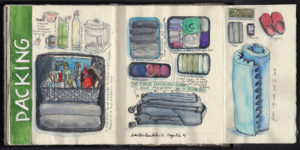
Here are some of my favorite pics (comments are mine):

Packing is serious, yo!!!
As is squaring our shoulders and packing away our fears!  Ipilimumab/Yervoy.
ONO4538, MDX1106, BMS 936558, Nivolumab, Opdivo!
The wait!!!!  We've all done plenty of that one, right???
BRAF/MEK, targeted therapy.
For a bit of an interview of Ellie and additional background on her work, here's a link to a write up by the AIM at Melanoma Foundation:  Sketching My Way through Metastatic Melanoma - by Eleanor Segal  as well as a copy of their report below:

Sketching Her Way Through Metastatic Melanoma

Nearly every melanoma patient or survivor that AIM has met has a coping mechanism, hobby, or pastime—something they do to help them in one way or another through their cancer.  The most common one we hear is connecting with other patients through social media.  But others include gardening, cooking, writing, and doing yoga.
Eleanor Segal sketches.  Ellie is 63, married, and a resident of Portland, Oregon.  Ellie always made things, and she went to art school.  She didn’t draw consistently through her life; she did metalsmithing, created lotions and potions, and worked in other media.  But she began drawing again just a few years ago, and now she has sketched her way through metastatic melanoma.
But let’s go back to the beginning.  In 1989, Ellie had a melanoma removed from her right thigh.  All was fine until 2013, when her doctor felt something unusual during a routine pelvic exam, which turned out to be fist-sized lymph node full of melanoma.  After being diagnosed with metastatic disease, she’s had four surgeries, a month of radiation, three types of immunotherapy, and currently, targeted therapy.  
After her metastatic diagnosis, she joined the Portland Chapter of Urban Sketchers, a global organization. Urban sketchers always carry their gear, draw wherever they are from observation, and share their work online.  The goal is not to be a perfectionist—not to spend too much time on any one sketch—but to show the world what they see, one sketch at a time.
So Ellie brought her sketchbook with her to all of her appointments, and she began sketching everything around her, from her Interleukin-2 IV fluid bags to the contents of her hospital suitcase to the view out her hospital window.
“I didn’t do this for therapy, or to help other people,” she says.  “It’s for me.  I make collages, write questions, make lists.  Sketching allows me to observe, process, sort things, and navigate complex decisions.”  Indeed, many of her sketches are combinations of items in the hospital—such as a scale or a pill—combined with details about treatment.  While some patients might take notes, Ellie sketches.
It wasn’t originally a goal to make a book, but she has published a beautiful volume of watercolor sketches entitled “Sketching My Way Through Metastatic Melanoma.”  Her family, friends, and healthcare providers are the lucky recipients of her books, and she has kindly included an AIM bookmark inside each volume, reminding those who receive the books to give to melanoma research.
Thank you, Ellie, for capturing in a beautiful form what so many of us have been through, and for letting AIM share a few of your sketches.  
You can reach Eleanor Segal via email: billellie@comcast.net

Thanks indeed, Ellie!!!  While your art certainly helped you cope with all you have endured, it has become a great boon to the rest of us as well.  Ubuntu!!! [I am because we are.] - love, les

Sunday, February 11, 2018

For Jubes...and the rest of us!!! An anti-rheumatic drug that increases the effect of vemurafenib and selumetinib????


The minute B found this article he was yelling, "Oh, this might be important to Jubes!!!"  Well, I hope not!!!  Many (actually - probably most!!!) folks who take immunotherapy deal with some amount of arthralgias (joint pain).  However, my sweet Anne-Louise dealt with significant arthritis/spondylitis due to her immunotherapy treatment for melanoma!  However, after prednisone and other meds like infliximab she got her joint pain under control and threw melanoma to the curb!!  But....immune disease and side effects with immunotherapy remain a significant double decker problem. 

First....what if you already know you have an immune disease like rheumatoid arthritis?  Can you still take immunotherapy?  The short answer is YES!!!  You can!!  Here is a recent post on the subject with more links within:  Immunotherapy for melanoma with a pre-existing autoimmune disease??? YES!!! You can!
Here's another report:  Patients with preexisting immune disease, melanoma, and treatment with Anti-PD-1? Yes, this can be done. Yes, autoimmune flares should be treated with immunosuppressive therapy while on immunotherapy. And YES!!!! These patients can still attain a response!

Second...there are the folks who didn't have arthritis or other autoimmune diseases (that they knew of) at the start of treatment...but end up with all sorts of immune related side effects caused by their immunotherapy.  What should we do with them????  Treat them!  Sometimes with a break of their immunotherapy, but with prednisone and other drugs as needed.  Right then, right there!  And, YES!!!  They can still go on to have a response and rid themselves of melanoma in the process!  (Just like Jubes!!!)  Here are related posts:  One more time: Immunosuppressive therapy to manage side effects to immunotherapy does NOT affect response! New report.
And this:  Immune related side effects from immunotherapy can and SHOULD be treated!!!!
And this:  Side effects and how to manage them in targeted and immunotherapy for melanoma
And finally...this post with a treatment algorithm for neuro side effects and links to algorithms for other immune related side effects:  Neurologic side effects to immunotherapy with treatment algorithm

Okay!  You'd probably like me to get to a point!  What if there was a drug that helped folks with their rheumatic disease AND helped get rid of their melanoma????  Well now, there's this:

The anti-rheumatic drug, leflunomide, synergizes with MEK inhibition to suppress melanoma growth. Hanson, Robinson, Al-Yousuf, et al.  Oncotarget. 2017 Dec 17.  

Cutaneous melanoma, which develops from the pigment producing cells called melanocytes, is the most deadly form of skin cancer. Unlike the majority of other cancers, the incidence rates of melanoma are still on the rise and the treatment options currently available are being hindered by resistance, limited response rates and adverse toxicity. We have previously shown that an FDA approved drug leflunomide, used for rheumatoid arthritis (RA), also holds potential therapeutic value in treating melanoma especially if used in combination with the mutant BRAF inhibitor, vemurafenib. We have further characterized the function of leflunomide and show that the drug reduces the number of viable cells in both wild-type and BRAFV600E mutant melanoma cell lines. Further experiments have revealed leflunomide reduces cell proliferation and causes cells to arrest in G1 of the cell cycle. Cell death assays show leflunomide causes apoptosis at treatment concentrations of 25 and 50 µM. To determine if leflunomide could be used combinatorialy with other anti-melanoma drugs, it was tested in combination with the MEK inhibitor, selumetinib. This combination showed a synergistic effect in the cell lines tested. This drug combination led to an enhanced decrease in tumor size when tested in vivo compared to either drug alone, demonstrating its potential as a novel combinatorial therapy for melanoma.  

In this study, researchers say that leflunomide...a drug used to treat rheumatoid arthritis...seemed to have "therapeutic value" when it was combined with vemurafenib (a BRAF inhibitor) as well as when it was combined with selumetinib (a MEK inhibitor)...in both BRAF positive and BRAF wild type patients!  So far, it seems that this is in petri dishes and real live furry ratties.  However, if this works this could be super cool for getting rid of melanoma as well as a boon for folks already dealing with arthritis...or perhaps debilitated by arthralgias due to their melanoma treatment.  

It's got a ways to go before we can get too excited.  But, I like the direction!!!  As for my dear Anne-Louise....I hope that she NEVER needs another melanoma or arthritis treatment....EVER!!!!  And...I do hope to hear her play her fiddle someday!!! 

Hang in there, ratties!  (Those that are furry and those who are not so much!) - c

Thursday, July 6, 2017

Side effects of immunotherapy - Part 9


And it continues....  Here is a link to Part 8 as well as prior posts:  The Saga of Side effects to Immunotherapy

Now these:

Immunotherapy-induced sarcoidosis in patients with melanoma treated with PD-1 checkpoint inhibitors: Case series and immunophenotypic analysis. Lomax, McGuire, McNeil, et al. Int J Rheum Dis. 2017 May 8.  

Sarcoidosis is a multisystem granulomatous disease. This condition has a documented association with the diagnosis of melanoma and can be induced in melanoma patients receiving anti-neoplastic therapy. We evaluated a case series of melanoma patients who developed immunotherapy-induced sarcoidosis.  Three patients with melanoma (n = 1 resected Stage III, n = 2 metastatic) treated with anti-programmed cell death (PD)-1 antibody therapy at two institutions developed biopsy-proven sarcoidosis. We used mass cytometry to determine expression of the relevant chemokine receptors (CR) by peripheral blood mononuclear cells for two of the three patients who developed sarcoidosis and 13 melanoma patients who did not. Blood samples were collected before receiving PD-1 checkpoint inhibitor therapy.  Immunophenotypic analysis demonstrated abnormally high numbers of circulating Th17.1...cells prior to commencing PD-1 checkpoint inhibitor therapy in five of 15 melanoma patients, including both the patients who developed sarcoidosis during the course of therapy.  Our findings support prior literature implicating Th17.1 cells in the pathogenesis of sarcoidosis. However, we demonstrate these findings in patients with melanoma prior to administration of checkpoint therapy and before the onset of clinically symptomatic sarcoidosis. The identification of elevated Th17.1 cells in melanoma patients who have not developed sarcoidosis may reflect the established association between melanoma and sarcoidosis. With some patients receiving these agents over a prolonged period, the clinical course of immunotherapy-induced sarcoidosis is uncertain.


Inflammatory Myopathy and Axonal Neuropathy in a Patient With Melanoma Following Pembrolizumab Treatment.  Diamantopoulos, Tsatsou, Benopoulou, et al. J Immunother. 2017 May 11.  

Immune-mediated adverse effects of immune checkpoint inhibitors are rather common, but neuromyopathic immune-related adverse events are very rare. In this report, we present a unique case of a patient with a complex neuromyopathic syndrome with axonal neuropathy and inflammatory myopathy after a single dose of pembrolizumab. An 82-year-old patient with a previously untreated stage IIIc melanoma developed ptosis in the left eye, generalized weakness, and neck and shoulder pain 15 days after pembrolizumab administration. He had left-sided ptosis and miosis, with a normal pupillary light reflex, horizontal diplopia, and voice hoarseness, along with weakness of the neck muscles and a hypokinetic right vocal cord at laryngoscopy. The laboratory evaluation was remarkable for the marked increase in the serum lactate dehydrogenase and creatine phosphokinase levels. Further evaluation revealed findings compatible with axonal neuropathy and inflammatory myopathy. The patient was treated with corticosteroids, immunoglobulin, and plasmapheresis, with a minor response; the patient eventually died. This case represents a newly described syndrome probably associated with pembrolizumab administration.


Neurologic Serious Adverse Events Associated with Nivolumab Plus Ipilimumab or Nivolumab Alone in Advanced Melanoma, Including a Case Series of Encephalitis.Larkin, Chmieloski, Lao, Hodi, Weber, et al. Oncologist. 2017 May 11.  
Despite unprecedented efficacy across multiple tumor types, immune checkpoint inhibitor therapy is associated with a unique and wide spectrum of immune-related adverse events (irAEs), including neurologic events ranging from mild headache to potentially life-threatening encephalitis. Here, we summarize neurologic irAEs associated with nivolumab and ipilimumab melanoma treatment, present cases of treatment-related encephalitis, and provide practical guidance on diagnosis and management.  We searched a Global Pharmacovigilance and Epidemiology database for neurologic irAEs reported over an 8-year period in patients with advanced melanoma receiving nivolumab with or without ipilimumab from 12 studies sponsored by Bristol-Myers Squibb. Serious neurologic irAEs were reviewed, and relationship to nivolumab or ipilimumab was assigned.  In our search of 3,763 patients, 35 patients (0.93%) presented with 43 serious neurologic irAEs, including neuropathy (n = 22), noninfective meningitis (n = 5), encephalitis (n = 6), neuromuscular disorders (n = 3), and nonspecific adverse events (n = 7). Study drug was discontinued (n = 20), interrupted (n = 8), or unchanged (n = 7). Most neurologic irAEs resolved (26/35 patients; 75%). Overall, median time to onset was 45 days (range 1-170) and to resolution was 32 days (2-809+). Median time to onset of encephalitis was 55.5 days (range 18-297); four cases resolved and one was fatal.  Both oncologists and neurologists need to be aware of signs and symptoms of serious but uncommon neurologic irAEs associated with checkpoint inhibitors. Prompt diagnosis and management using an established algorithm are critical to minimize serious complications from these neurologic irAEs. The Oncologist 2017;22:1-10Implications for Practice: With increasing use of checkpoint inhibitors in cancer, practicing oncologists need to be aware of the potential risk of neurologic immune-related adverse events and be able to provide prompt treatment of this uncommon, but potentially serious, class of adverse events. We summarize neurologic adverse events related to nivolumab alone or in combination with ipilimumab in patients with advanced melanoma from 12 studies and examine in depth 6 cases of encephalitis. We also provide input and guidance on the existing neurologic adverse events management algorithm for nivolumab and ipilimumab.


Autoimmune diabetes induced by PD-1 inhibitor-retrospective analysis and pathogenesis: a case report and literature review. Gauci, Laly, Vidal-Trecan, et al. Cancer Immunol Immunother. 2017 Jun 20. 
Anti-PD-1 antibody treatment is approved in advanced melanoma and provides median overall survival over 24 months. The main treatment-related side effects are immune-related adverse events, which include rash, pruritus, vitiligo, thyroiditis, diarrhoea, hepatitis and pneumonitis. We report a case of autoimmune diabetes related to nivolumab treatment. A 73-year-old man was treated in second line with nivolumab at 3 mg/kg every two weeks for metastatic melanoma. At 6 weeks of treatment, he displayed diabetic ketoacidosis. Nivolumab was withheld 3.5 weeks and insulin therapy was initiated, enabling a normalization of glycaemia and the disappearance of symptoms. Laboratory investigations demonstrated the presence of islet cell autoantibodies, while C-peptide was undetectable. Retrospective explorations on serum banked at week 0 and 3 months before the start of nivolumab, already showed the presence of autoantibodies, but normal insulin, C-peptide secretion and glycaemia. Partial response was obtained at month 3, and nivolumab was then resumed at the same dose. The clinical context and biological investigations before, at and after nivolumab initiation suggest the autoimmune origin of this diabetes, most likely induced by anti-PD-1 antibody in a predisposed patient. The role of PD-1/PD-L1 binding is well known in the pathogenesis of type 1 diabetes. Therefore, this rare side effect can be expected in a context of anti-PD-1 treatment. Glycaemia should be monitored during PD-1/PD-L1 blockade. The presence of autoantibodies before treatment could identify individuals at risk of developing diabetes, but systematic titration may not be relevant considering the rarity of this side effect.


Myasthenia gravis: An emerging toxicity of immune checkpoint inhibitors. Makarious, Horwood, Coward.  Eur J Cancer. 2017 Jun 27.

The advent of immunotherapy has heralded a number of significant advances in the treatment of particular malignancies associated with poor prognosis (melanoma, non-small-cell lung, renal and head/neck cancers). The success witnessed with therapeutic agents targeting cytotoxic T-lymphocyte-associated protein 4, programmed cell death protein 1 and programmed cell death ligand 1 immune checkpoints has inevitably led to an explosion in their clinical application and the subsequent recognition of specific toxicity profiles distinct from those long recognised with chemotherapy. Consequently, as the utility of such therapies broaden, understanding the nature, timing and management of these immune-related adverse events (irAEs) becomes increasingly significant. Although neurological irAEs are considered relatively rare in comparison with hepatitis, colitis, pneumonitis and endocrinopathies, one emerging side-effect is myasthenia gravis (MG). Among the 23 reported cases of immune checkpoint inhibitor-associated MG, 72.7% were de novo presentations, 18.2% were exacerbations of pre-existing MG and 9.1% were exacerbations of subclinical MG. The average onset of symptoms was within 6 weeks (range 2-12 weeks) of treatment initiation. In addition, there was no consistent association with elevated acetylcholine antibody titres and the development of immune checkpoint inhibitor-related MG. Significantly, there was a 30.4% MG-specific-related mortality, which further emphasises the importance of early recognition and robust treatment of this toxicity. In addition to a review of the existing literature, we present a new case of pembrolizumab-induced MG and provide insights into the underlying mechanisms of action of this phenomenon.

Pretty crazy stuff can develop as a side effect from immunotherapy.  Over 7 years ago, Weber told me, "This stuff is weird!"  No kidding.  So, as best you can...report any worrying signs or symptoms to your doc as soon as you can.  It may not result in completely eradicating the problem, but it could go a long way in curtailing additional damage or save your life!  Furthermore, there is good data that rapid treatment with prednisone, sometimes with a break in treatment and sometimes not, can:
1.  Bring the problem under control.
2.  Often allows a return to therapy.
3.  Does NOT adversely impact response to the melanoma treatment!!!!

Here are previously posted reports on how to deal with side effects to immunotherapy:
A discussion by Weber and Agarwala from 2015:  Side effects and how to manage them in targeted and immunotherapy for melanoma
From 2016:  How to deal with GI, endocrine, hepatic and pulmonary side effects subsequent to anti-PD-1
From 201:  Neurologic side effects to immunotherapy with treatment algorithm

Hang in there peeps!!!  - c

Sunday, March 5, 2017

Patients with preexisting immune disease, melanoma, and treatment with Anti-PD-1? Yes, this can be done. Yes, autoimmune flares should be treated with immunosuppressive therapy while on immunotherapy. And YES!!!! These patients can still attain a response!


Back when the world was young (2010 or so) and ipi (in other words, immunotherapy period) was finally producing positive responses for folks with melanoma, we simultaneously learned of the negative effects that could be wrought on the poor patient's immune system and really feared what could possibly happen if you were treated with immunotherapy when you KNEW that you already had an existing autoimmune disease process like asthma, colitis, or arthritis.  The solution by pharma and researchers? Exclusion from treatment!!!  By 2014, with this still unsolved conundrum hanging in the air, we certainly didn't know what to do with folks who developed immune related side effects to ipi, but still needed treatment for melanoma.  Could they be treated with the two newer immunotherapy drugs, anti-PD-1 products Nivo (Opdivo) or Pembro (Keytruda)?  No!  Exclusion from treatment remained the norm...as you can see in this post!!  (Yes, children.  Folks talked pretty funny back then, calling Keytruda, first MK-3475, then Lambrolizumab, then Pembrolizumab! Crazy things happen when the world is new!!)

Anyhow - here's the link:

Program for MK-3475 in Participants With Metastatic Melanoma Who Have Failed Standard of Care Therapy Including Ipilimumab (MK-3475-030)  which says in part, with my response:
Exclusions include - "history of life-threatening or severe immune-related adverse event" on prior immunotherapy.   Who decides?  Is an admission for colitis on ipi, though now recovered, considered a "severe immune-related adverse event"?  Is ipi induced hypothyroidism?

As things moved along...there was this:  April 2016: Anti-PD1 success in melanoma despite prexisting autoimmune disease, a case report

And this from ASCO (See the first abstract):  ASCO 2016 - Three anti-PD-1 reports

Now, there's this:

Programmed cell death protein-1 (PD-1) inhibitor therapy in patients with advanced melanoma and preexisting autoimmunity or ipilimumab-triggered autoimmunity. Gutzmer, Koop, Meier, et al. Eur J Cancer. 2017 Feb 16.


Programmed cell death protein 1 (PD-1) inhibitors are a common treatment strategy for metastatic melanoma and other tumour entities. Clinical trials usually exclude patients with preexisting autoimmune diseases, thus experience with PD-1 inhibitor (PD-1i) in this patient population is limited.
Metastatic melanoma patients with preexisting autoimmune disorders or previous ipilimumab-triggered immune-related adverse events (irAE) undergoing treatment with PD-1i from seven German skin cancer centres were evaluated retrospectively with regard to flare of the preexisting autoimmunity and development of new, not preexisting irAE as well as response to PD-1i therapy.
In total, 41 patients had either preexisting autoimmunity (n=19, group A, including two patients with additional ipilimumab-triggered autoimmune colitis) or ipilimumab-triggered irAE (n=22, group B). At PD-1i therapy initiation, six patients in group A and two patients in group B required immunosuppressive therapy. In group A, a flare of preexisting autoimmune disorders was seen in 42% of patients, new irAE in 16%. In group B, 4.5% of patients showed a flare of ipilimumab-triggered irAE and 23% new irAE. All flares of preexisting autoimmune disorders or irAE were managed by immunosuppressive and/or symptomatic therapy and did not require termination of PD-1i therapy. tumour responses (32% in group A and 45% in group B) were unrelated to occurrence of autoimmunity.
While preexisting autoimmunity commonly showed a flare during PD-1i therapy, a flare of ipilimumab-triggered irAE was rare. Response rates were above 30% and unrelated to irAE. PD-1i therapy can be considered in patients with autoimmune disorders depending on severity and activity of autoimmunity.

So....while caution and careful monitoring is certainly warranted...these peeps with an inherent pre-existing autoimmune process or one gained from having taken ipi....were successfully managed with "immunosuppressive therapy", "did not require termination of anti-PD-1 therapy", AND gained responses at a rate of 32-45%!!!!!!!!!!!!!!

ONE MORE TIME! Folks with immune disease took anti-PD-1, took prednisone or other immunosuppressive treatment to manage flares, did NOT have to stop anti-PD-1 therapy, and many DID gain a response!  

Could all you oncologists out there read and repeat??  Folks with auto-immune conditions CAN take immunotherapy with careful monitoring. Auto-immune flares SHOULD be treated with immunosuppressive therapy while on immunotherapy.  AND these patients can STILL.....GAIN A RESPONSE!  

And in case that still isn't clear enough...  What happens to folks with recurrent Stage IV melanoma who aren't effectively treated????  There ain't no Stage V people!

Okay, I'll quit yelling.  For now. - c

Wednesday, March 9, 2016

Immune reactions with anti-PD1 can be SERIOUS!!!!


Autoimmune inner ear disease in a melanoma patient treated with pembrolizumab.  Zibelman, Pollak, Olszanski, et al.  J Immunother Cancer. 2016 Feb 16.

Immune related adverse events affecting various organ systems are a recognized potential consequence of immune checkpoint inhibition. However, autoimmune inner ear disease is one complication not previously associated with the use of checkpoint inhibitors, though it has been reported after adoptive cell immunotherapy.  Here we present what we believe is the first case of autoimmune inner ear disease resulting from treatment with an immune checkpoint inhibitor in a patient with metastatic melanoma. An 82 year old male presented with widespread metastatic mucosal melanoma and was initially treated with the CTLA-4 inhibitor ipilimumab but had progression of disease after four doses. He was subsequently treated with the PD-1 inhibitor pembrolizumab and after two doses the patient noted bilateral hearing loss. Otology evaluation was significant for the development of bilateral sensorineural hearing loss and the patient was started on treatment with bilateral intratympanic dexamethasone injections. He experienced significant recovery of his hearing deficit with the intratympanic injections and restaging imaging after 12 weeks of pembrolizumab demonstrated a dramatic reduction in tumor burden.  Autoimmune inner ear disease has been previously associated with the therapeutic transfer of genetically engineered lymphocytes as an on-target effect of donor T-cells recognizing antigens on cells in the inner ear. It is important for physicians to have a high clinical index of suspicion for the appropriate recognition and management of any potential autoimmune toxicity with checkpoint inhibitors given the variability of presentation and unique aspects of toxicity.

Severe Hyponatremia and Immune Nephritis Following an Initial Infusion of Nivolumab.  Vandiver, Singer, Harshberger.  Target Oncol. 2016 Mar 4. 

Anti-programmed cell death-1 (PD-1) antibodies pembrolizumab and nivolumab are becoming increasingly important in the treatment of melanoma and non-small cell lung cancer. These agents are known to induce many immune-related adverse events, but rapid-onset nephritis and immune-related hyponatremia have not been described to date. We describe the case of an adult patient who developed severe hyponatremia and rapid-onset nephritis following the first infusion of nivolumab for metastatic melanoma.

Pembrolizumab-induced necrotic myositis in a patient with metastatic melanoma.  Vallet, Gaillet, Weiss, et al.  Ann Oncol. 2016 Mar 2.

Toxic Epidermal Necrolysis-like Reaction With Severe Satellite Cell Necrosis Associated With Nivolumab in a Patient With Ipilimumab Refractory Metastatic Melanoma.  Nayar, Briscoe, Fernandez Penas.  J Immunother. 2016 Mar 1.

Nivolumab is a fully humanized monoclonal antibody to PD-1, which has shown improved overall and progression-free survival.  Across studies of nivo, grade 3 or 4 rash has been noted in more than 1% of patients.  We present a case report of a pt with metastatic melanoma...who developed toxic epidermal necrolysis.   A 64 year old female presented with widespread maculopapular skin rash with bullae and areas of skin detachment after receiving 2 doses of nivo for ipi refractory metastatic melanoma (BRAF wild type).  She was initially treated with prednisone, which was soon changed to methylprednisone followed by immunoglubulin with minimal response to the rash. After discussion with Dermatology, she was given cyclosporine and high-dose prednisone with gradual but significant improvement in her rash. Her skin biopsy showed interface dermatitis with a lymphocytic infiltrate in the dermoepidermal junction and apoptotic keratinocytes with focal areas of complete necrosis of the epidermis with minimal infiltrate.

Be sure to talk to your doctor if you think any of these are other side effects may be happening to you!!!! - c


Saturday, December 26, 2015

Yep! Immunotherapy can work in the brain...and pseudoprogression can be real!!


Melanoma brain metastasis pseudoprogression after pembrolizumab treatment. Cohen, Alomari, Vortmeyer, et al. Cancer Immunol Res. 2015 Dec 23

"The role of immunotherapy in treatment of brain metastases is unknown since most trials exclude patients with active brain lesions. As new immunomodulating agents gain approval for many malignancies, it is important to know if they have unique effects in the central nervous system (CNS). Here we present a case of a patient with progressing brain metastases treated with a single cycle of pembrolizumab, who presented with mental status changes 11 days thereafter. MRI of the brain showed enlargement of CNS lesions with intense central enhancement and diffuse perilesional edema. Histologic evaluation of a resected lesion revealed isolated clusters of tumor cells surrounded by reactive astrocytosis, scattered inflammatory cells and an abundance of microglial cells. Given the increasing use of immune checkpoint inhibitors in patients with brain metastases from melanoma and other diseases, recognition of pseudoprogression and management with immune suppression is essential."

Y'all know I've been yelling this for awhile:
1.  Yes, Virginia....immunotherapy works in the brain.  Anti-pd1 in melanoma: It works in the t-cells, brain, and everywhere else! 
2. It works even better combined with radiation.  Radiation for melanoma: better when combined with immunotherapy 
3.  No, we didn't allow folks with brain mets in treatments that could help soon enough!   
4.  Pseuodoprogression is real and it, along with other side effects, SHOULD be treated...even with prednisone (and other immune suppressing drugs) if needed when on immunotherapy!!!!!!  Those treatments do NOT impede response, but they can save your life and/or allow you to continue the therapy that will!!!  

Whew!  Ok.  Rant over.  I feel better.  Now...let's get lots of other folks feeling better.  We KNOW this stuff now!!  Let's USE what the ratties, who put their lives on the line, taught us for the good of ALL peeps dealing with melanoma in the brain and elsewhere. - c