
Wednesday, November 8, 2017
A look back - ipi and pembro
Here are couple of review papers looking at ipi and pembro ~
Real world treatment patterns and outcomes among metastatic cutaneous melanoma patients treated with ipilimumab. Mohr, Ascierto, Arance, et al. J Eur Acad Dermatol Venereol. 2017 Oct 17.
There is a scarcity of real-world data on treatment patterns and outcomes among advanced melanoma patients treated with immunotherapies including ipilimumab, an anti-CTLA-4 antibody approved since 2011. To evaluate ipilimumab and post-ipilimumab treatment patterns and outcomes among patients with advanced melanoma in Australia, Germany, Italy and Spain following regulatory approval. Retrospective multicentre, multinational, observational chart review study. Data were extracted from the start of ipilimumab therapy until the end of at least 40 weeks of follow-up, or death.
Data from 371 patients (Australia, 103; Germany, 152; Italy, 76; Spain, 40) were analysed. Mean age was 65 years; 62% were male. Eastern Cooperative Oncology Group performance status (ECOG PS) was 0 or 1 for 94%. In 67%, ipilimumab was initially received as second-line or later therapy. Patients received on average 3.4 ipilimumab doses. The ipilimumab-refractory cohort comprised of 226 patients. Of these, 17% in Australia, 47% in Germany, 29% in Italy and 14% in Spain received another anti-melanoma treatment after ipilimumab including chemotherapy in 26% and BRAF/other kinase inhibitors in 11%. Ipilimumab-refractory patients who received post-ipilimumab treatment showed a 40% reduced hazard of dying than those not receiving treatment after ipilimumab, after adjustment for potential confounders.
During the time observed, ipilimumab was mainly used as second-line or later therapy. A significant proportion of patients received post-ipilimumab therapy, most of which was chemotherapy. Nevertheless, overall survival following progression on ipilimumab treatment remained poor, highlighting the need for research to develop more effective end-of-life treatment options.
Sadly, yep. We knew that. There is also this:
Efficacy and Safety of Pembrolizumab in Patients Enrolled in KEYNOTE-030 in the United States: An Expanded Access Program. Gangadhar, Hwu, Postow, Hamid, Daud...O'Day, Hodi, Pavlick, et al. J Immunother. 2017 Nov/Dec.
KEYNOTE-030 (ClinicalTrials.gov ID, NCT02083484) was a global expanded access program that allowed access to pembrolizumab, an antiprogrammed death 1 antibody, for patients with advanced melanoma before its regulatory approval. Patients with unresectable stage III/IV melanoma that progressed after standard-of-care therapy, including ipilimumab and, if BRAF mutant, a BRAF inhibitor, were eligible to receive pembrolizumab 2 mg/kg every 3 weeks. Response was assessed by immune-related response criteria by investigator review. Adverse events (AEs) were graded according to the National Cancer Institute Common Terminology Criteria for Adverse Events, version 4.0. In the United States, 979 patients enrolled between April and September 2014. Of the 947 evaluable patients, 621 (65.6%) remained on treatment and transitioned to receive commercial pembrolizumab following approval by the Food and Drug Administration, whereas 326 (34.4%) discontinued, most commonly for disease progression (39.6%) or death (26.4%). Objective response rate was 14.5% in the treated population (n=947) and 22.1% in patients who had greater than/= to1 response assessment reported (n=619). Twelve patients achieved complete response. One hundred eighty-one (19.1%) patients experienced greater than/= to 1 treatment-related AE, most commonly general disorders (8.0%), skin/subcutaneous tissue disorders (7.3%), and gastrointestinal disorders (6.4%); 29 (3.1%) patients experienced greater than/= to 1 grade 3/4 treatment-related AE. Immune-mediated AEs were also reported. There were no treatment-related deaths. The safety and efficacy observed in this expanded access program were consistent with those previously reported for similar populations and support the use of pembrolizumab for patients with advanced melanoma.
Remembering that this was back in the day, when in order to attain pembro, you had to have "progressed after standard-of-care therapy" (meaning ipi and BRAFi - if BRAF positive) - a circumstance which we now know provides a LESSER response to immunotherapy like pembo and nivo - Yep. We knew this, too!!
While a look back is essential for progress and incredible strides have been made in treatments available for melanoma patients in the past 5 years, a best case 40-50% response rate leaves far too many in need of effective therapy. Come on researchers!!! Ratties are counting on you. Let's move forward....FAST! - c


Sunday, November 5, 2017
Copper Chelation to inhibit BRAF V600E melanoma growth and decrease resistance to BRAF/MEK inhibitors???
I've actually reported on Copper Chelation and melanoma before. Here is this from 2015: CDK4/6 inhibitors, PLX8394, or copper chelation?????
Now there's this:
Copper
Chelation Inhibits BRAFV600E-driven Melanomagenesis and Counters
Resistance to BRAFV600E and MEK1/2 Inhibitors. Counter, Crowe,
Greenberg and Brady. Cancer
Res. 2017 Oct 6.
MEK1/2
and BRAFV600E inhibitors are used to treat BRAFV600E-positive
melanoma, with other cancers under evaluation. Genetic perturbation
of copper import or pharmacological reduction of copper with the
clinical copper chelator TTM inhibits MEK1/2 kinase activity and
reduces BRAFV600E-driven tumorigenesis. In this study, we report that
TTM inhibited transformed growth of melanoma cell lines resistant to
BRAF or MEK1/2 inhibitors and enhanced the antineoplastic activity of
these inhibitors. TTM also provided a survival advantage in a
genetically engineered mouse model of melanoma, and when accounting
for putative overdosing, trended towards an increase in the survival
benefit afforded by BRAF inhibition. This effect was phenocopied by
genetically inhibiting copper import in tumors, which was linked to a
reduction in MAPK signaling. Thus, TTM reduces copper levels and MAPK
signaling, thereby inhibiting BRAFV600E-driven melanoma tumor growth.
These observations inform and support clinical evaluation of TTM in
melanoma.Sounds good to me! Hang in there ratties! - c
Thursday, November 2, 2017
I've repeated it endlessly. If you have melanoma - you need an EXPERT!!!!
I have long ranted about the need for a melanoma expert if you are dealing with melanoma. And holy crappy wizard balls! Was I ever right!!! ~
Variance between
experts and community practitioners in the use of immune checkpoint
inhibitors for advanced melanoma. Quill, Agarwala, Atkins, Daud, Flaherty, Weber, Obholz. Society for Melanoma Research 2016 Congress. Published 29 January 2017.
Immune checkpoint blockade
has revolutionized the care of patients (pts) with melanoma; however,
treatment guidelines lack specific recommendations on the use of
these agents for individual pt cases. We developed an interactive,
online treatment (Tx) decision tool to assess whether expert Tx
recommendations based on specific disease and pt characteristics
would affect the planned Tx decisions of community practitioners. In
January 2016, 5 experts provided Tx recommendations for 90 case
variations based on key factors they considered important to guide Tx
choice and then an online tool was developed to provide this guidance
to clinicians. To use the tool, specific pt and disease
characteristics along with the intended Tx for that pt were entered.
Then Tx recommendations from 5 experts for that scenario were
provided and users were prompted to indicate whether this online
consultation would change their Tx plan. An analysis of 432 cases
entered into the tool found variation between the intended use of
immunotherapy among tool users versus Tx recommendations from the
experts. For example, compared with the experts who all chose immune
checkpoint blockade as frontline Tx for BRAF wild-type disease, 44%
of tool users planned to use a different Tx or were unsure. For
BRAFV600-mutant
disease with a good PS and normal LDH, all of the experts recommended
frontline immunotherapy whereas 55% of users selected combination
BRAF/MEK therapy for this scenario. In total, 59% of tool users whose
planned Tx differed from the experts indicated that the expert
recommendations from the tool would subsequently change their Tx
plan. An analysis of specific first- and second-line agent and
combination choice along with Tx variance in other case scenarios
will be presented.
What the hell is wrong with these community oncologists???? I have been providing care to children for over 30 years. Not only does maintenance of my license REQUIRE continuing education training on an annual basis, but I REQUIRE keeping up with changes in standards of care for my little patients of MYSELF!!!! How in the world these providers could insert the particulars of their patient's melanoma data into a program designed by melanoma experts and PURPOSELY CHOOSE to provide a "treatment" NOT recommended is beyond me!!! But...they did.
This report highlights a sad state of medicine and a seriously scary situation for folks with melanoma. All I can tell you is: learn from more than half of these 432 ratties (and these are just the ones we know about in this particular study) who were given treatment that was NOT recommended by melanoma experts by their local oncologist. RUN, don't walk...even if it takes more effort than a trip to a local onc...to a melanoma expert if you are dealing with melanoma. Your life may depend on it! - c
Tuesday, October 31, 2017
Trick or Treat!!!!
Halloween has been a weird day for me for the past 7 years. On October 26 of 2010, I learned, PET scan clear..., after having had SRS to a melanoma brain met earlier that year on April 27, followed by surgical removal of the upper lobe of my right lung due to a bronchial met April 30, also 2010. YAY!!! Right? Well, not exactly, as I noted in this post: Craziness again....
Even while getting my scans that October day, I had a strange feeling in the back of my throat. When home, I took a look. A black lump was sitting behind my right tonsilar pillar. Sure enough. Melanoma (that had NOT shown up on the recent scan) had struck again. I ended up with a right tonsillectomy, with wide margins, on Saturday October 30, 2010. B had to work, so I was handing out candy to the Trick-or-Treaters on my own just after, on Halloween. Yes, I was back at work on Monday. No, I did not gain access to any systemic treatment for all the melanoma I had been dealing with since 2003 until my nivolumab (Opdivo) trial in December of 2010. So....yeah. Halloween is a weird walk down a very bumpy memory lane! Oddly enough, on the 7 year anniversary of that tonsillar fun, I suddenly developed a nasty sore throat...viral...not that big a deal. Thanks little critters!!! I'll be fine. But, it has felt a bit like a super eerie somatoform disorder!!! Trick or treat???????
Apart from that weirdness, Halloween has been fun. Lots of cute critters in the office today. And a week or so ago, Roo and her J were over for dinner and punk'n carving!!!
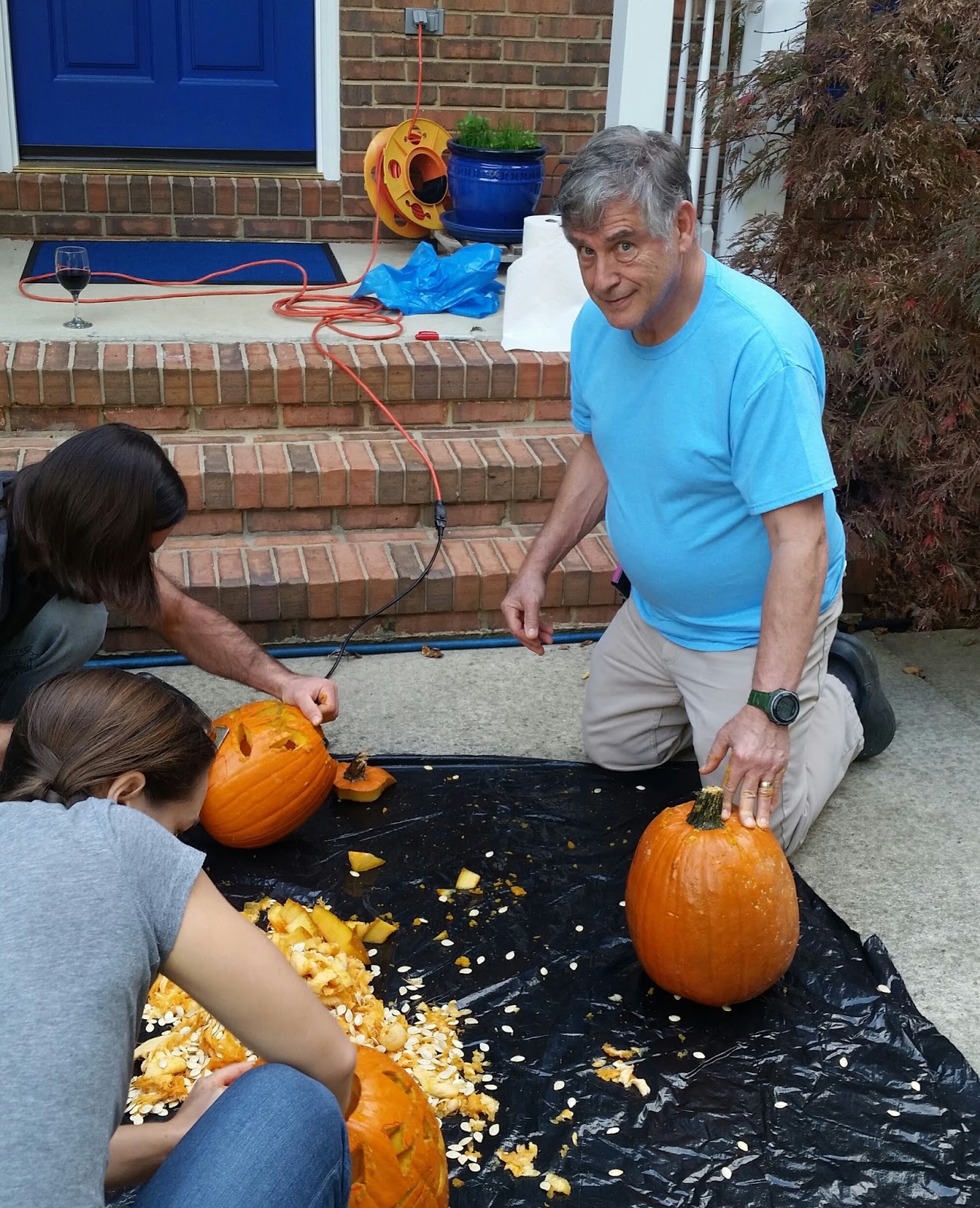 |
| They have it down to a science! |
 |
| Such cuties!!! |
 |
| Spooky! Right? |
I had one weird experience that has turned out fine, over the past couple of months. When having my teeth cleaned, my dear hygienist was clearly alarmed by a lesion on the inside of my cheek. She asked if I had bitten myself, and goof that I am, I had! But, when I got home, I realized the area she was concerned about, was NOT the spot I had accidentally bitten. So, good patient that I occasionally am, I pointed out the area to my oncologist at my annual check up. She felt that it was vitiligo/scar tissue from an oral lesion, given my vitiligo generally and oral issues in particular, but wanted me to see an ENT to be sure. Good Grief!!! But, I did it. The ENT was not impressed, offered to do a biopsy if I was concerned, but we opted to let it go!!
In keeping with this weird, wonderful world in which I live, just a few days ago B brought home this clipping in a bunch of pics and other bits and bobs a cousin of his had found when going through some of her things:

In this part of our local paper, dateline July 1995, you will see the cutest pediatrician EVAH!!!! - who had given advice on care and safety of kiddo's during the summer...AND..... Look to the left! The column headline is "Melanoma compound helps"!! It is an article reporting a study out of Vienna, in which 53 Stage II and 15 Stage III melanoma patients had been given interferon. Shockingly, the patients hadn't done very well, but the researchers still had hope that had they just treated the patients longer, all would have been well!!!
How's that for a weird trick??? Little did we know or notice, in 1995, that life would be very different for all of us in 2003, 2007, 2010 and......2017!!!
And....so it is.... Maybe not just like we said it would be....but pretty damn good, anyway!!
Happy Halloween! Can't take my eyes off of you, B!!! love, les
Sunday, October 29, 2017
Do melanoma peeps with side effects to immunotherapy have a better response? - Side effects of immunotherapy - Part 10!!!
I've been posting data and case studies of Side Effects of Immunotherapy - Part 9! forever!!!
Here are two articles that address side effects with the ipi/nivo combo specifically:
Nivolumab Plus Ipilimumab in Patients With Advanced Melanoma: Updated Survival, Response, and Safety Data in a Phase I Dose-Escalation Study. Callahan, Kluger, Postow, et al. J Clin Oncol. 2017 Oct 17.
The clinical activity observed in a phase I dose-escalation study of concurrent therapy with nivolumab (NIVO) and ipilimumab (IPI) in patients with previously treated or untreated advanced melanoma led to subsequent clinical development, including randomized trials. Here, we report long-term follow-up data from study CA209-004, including 3-year overall survival (OS).
Concurrent cohorts 1, 2, 2a, and 3 received escalating doses of NIVO plus IPI once every 3 weeks for four doses, followed by NIVO once every 3 weeks for four doses, then NIVO plus IPI once every 12 weeks for eight doses. An expansion cohort (cohort 8) received concurrent NIVO 1 mg/kg plus IPI 3 mg/kg once every 3 weeks for four doses, followed by NIVO 3 mg/kg once every 2 weeks, which is the dose and schedule used in phase II and III studies and now approved for patients with unresectable or metastatic melanoma.
Among all concurrent cohorts (N = 94) at a follow-up of 30.3 to 55.0 months, the 3-year OS rate was 63% and median OS had not been reached. Objective response rate by modified WHO criteria was 42%, and median duration of response was 22.3 months. Incidence of grade 3 and 4 treatment-related adverse events was 59%. The most common grade 3 and 4 treatment-related adverse events were increases in lipase (15%), alanine aminotransferase (12%), and aspartate aminotransferase (11%). One treatment-related death (1.1%) occurred in a patient who had multiorgan failure 70 days after the last dose of NIVO plus IPI.
This is the longest follow-up for NIVO plus IPI combination therapy in patients with advanced melanoma. The 3-year OS rate of 63% is the highest observed for this patient population and provides additional evidence for the durable clinical activity of immune checkpoint inhibitors in the treatment of advanced melanoma.
OK. Here 94 peeps took the ipi/nivo combo in several different ways. For all of them, the 3 year overall survival rate was 63% with the median rate not yet reached after f/u for 30-55 months. This is significant evidence pointing toward the durability of a response to this combo. Objective response rates were 42%, with a median duration of response at 22.3 months. More than half of the patients experienced Grade 3 and 4 side effects. Understand that these are things that are much greater than fatigue, rash, and mild to moderate joint pain. Of the Grade 3/4 side effects the most common one was elevated liver and pancreatic enzymes. One patient died from multi-system failure 70 days AFTER their last dose.
Pooled Analysis Safety Profile of Nivolumab and Ipilimumab Combination Therapy in Patients With Advanced Melanoma. Sznol, Ferrucci, Hogg, et al. J Clin Oncol. 2017 Sep 15.
The addition of nivolumab (anti-programmed death-1 antibody) to ipilimumab (anti-cytotoxic T-cell lymphocyte-associated 4 antibody) in patients with advanced melanoma improves antitumor response and progression-free survival but with a higher frequency of adverse events (AEs). This cross-melanoma study describes the safety profile of the approved nivolumab plus ipilimumab regimen.
This retrospective safety review on data from three trials (phase I, II, and III) included patients with advanced melanoma who received at least one dose of nivolumab 1 mg/kg plus ipilimumab 3 mg/kg every 3 weeks × 4 and then nivolumab 3 mg/kg every 2 weeks until disease progression or unacceptable toxicity while following established guidelines for AE management. Analyses were of all treatment-related AEs, select (immune-related) AEs, time to onset and resolution, and use of immune-modulating agents and their effects on outcome. Among 448 patients, median duration of follow-up was 13.2 months. Treatment-related grade 3/4 AEs occurred in 55.5% of patients; 35.7% had treatment-related AEs that led to discontinuation. The most frequent treatment-related select AEs of any grade were skin (64.3%) and GI (46.7%) and of grade 3/4, hepatic (17.0%) and GI (16.3%); 30.1% developed a grade 2 to 4 select AE in more than one organ category. Median time to onset of grade 3/4 treatment-related select AEs ranged from 3.1 (skin) to 16.3 (renal) weeks, and with the exclusion of endocrine AEs, median time to resolution from onset ranged from 1.9 (renal) to 4.5 (pulmonary) weeks, with resolution rates between 79% and 100% while using immune-modulating agents. Four on-study deaths were attributed to therapy.
Frequency of grade 3/4 treatment-related AEs was higher with nivolumab plus ipilimumab and occurred earlier than historical experience with either agent alone, but resolution rates were similar.
This study looked back on 448 patients who had been treated with the ipi/nivo combo in a traditional manner. Again, more than 50% of the patients had Grade 3/4 side effects with more than 30% of those having to stop treatment. Most common side effects generally, were related to skin and GI issues. When looking at Grade 3/4 side effects, the most common ones affected the liver and GI tract (much like the prior study). Onset of Grade 3/4 side effects took only 3 weeks for skin and 16 weeks for renal problems. With endocrine side effects excluded, the average time it took for side effects to resolve was about 2 weeks for renal and 4+ weeks for pulmonary issues. Resolution rates were between 79 and 100% with immune-modulating agents {read: steroids or medicines like remicaid/infliximab and others}. I suspect that side effects in the endocrine system, given the nature of that beast and the fact that they were "excluded" here, were NOT "resolved" with such immune-modulation, but rather required therapy for the duration of the patient's life, as treatment for diabetes and hypothyroidism is expected to be.
Three new cases of bullous pemphigoid during anti-PD-1 antibody therapy. Le Naour, Peuvrel, Saint-Jean, et al. J Eur Acad Dermatol Venereol. 2017 Sep 2.
Anti-programmed death 1 (PD-1) antibodies are revolutionizing the treatment of many cancers, including melanoma . Cutaneous adverse events (AE) of anti-PD-1 antibodies are common (20%) and mainly non-specific. Bullous pemphigoids (BP) are very rare immune-related AEs induced by anti-PD-1 antibodies, with only 12 cases previously published. We report here three new cases of BP during anti PD-1 therapy with nivolumab.
Anti-programmed death 1 (PD-1) antibodies are revolutionizing the treatment of many cancers, including melanoma . Cutaneous adverse events (AE) of anti-PD-1 antibodies are common (20%) and mainly non-specific. Bullous pemphigoids (BP) are very rare immune-related AEs induced by anti-PD-1 antibodies, with only 12 cases previously published. We report here three new cases of BP during anti PD-1 therapy with nivolumab.
So....one more lovely thing that can develop with immunotherapy, which I've reported on before in these posts: immunotherapy and bullous skin eruptions
We already know that vitiligo, as a response to immunotherapy, is a good prognostic sign. But, what do other toxic reactions mean in regard to response rates? Below ~ an article that begins to address that issue:
Correlation between toxicity and outcome in melanoma patients treated with ipilimumab plus nivoumab (ipi/nivo). Cohen, Jilaveanu...Sznol, et al. Society for Melanoma Research 2016 Congress. Published 29 January 2017.
Immune checkpoint inhibitors have become the standard of care for treatment of metastatic melanoma. However immune-related adverse events (irAEs) remain a serious concern. We report our experience investigating the potential correlation between degree of toxicity and progression-free survival (PFS). 74 pts were treated with the combination of ipi/nivo as part of the phase I trial, [NCT01024231], an expanded access protocol [NCT02186249] or with commercially available drugs from Dec. 2009 to Oct. 2015. irAEs were graded according to the CTCAE v4.0 and steroid use was studied as a surrogate for overall toxicity. 69 (93%) pts experienced an irAE of any grade. 39 pts (53%) had a grade 3 irAE and 4 (5%) had a grade 4 irAE. Pts often experienced greater than1 irAE. Females tended to get more toxicities than males. The median PFS in the patient population was 9 months (range 0–65). The median OS was 16 months (range 3–65). The objective response rate was 55%. 70 pts survived greater than 6 months. There was a statistically significant difference in the PFS in pts who experienced no irAEs when compared with those who had any irAEs. Similar findings were seen in the analysis of OS. PFS and OS were also stratified by length of time on steroids. Any steroid requirement at all was associated with a reduced risk of disease progression but the number of days on steroids above the median (23 days) corresponded with an increased risk of progression. Pts treated with the combination of ipi/nivo who received steroids to treat autoimmune toxicity had improved outcomes when compared with those pts who received no steroids, suggesting that pts who have some irAEs from immunotherapy may have improved outcomes. However, a fine balance between autoimmunity and anti-tumor response may be necessary for optimal long-term outcomes.
Here, of 74 patients treated with ipi/nivo, 93% had some level of side effects and 39 (once again, more than 50%) experienced Grade 3/4 side effects. PFS was 9 months. OS was 16 months. Objective response rate was 55%. 70 of the 74 lived more than 6 months. OKAY...but to the point of the current question: "There was a statistically significant difference between the PFS in patients" with NO side effects when compared to those who had ANY. This was true of overall survival as well. Furthermore, "Any steroid requirement at all was associated with a reduced risk of disease progression." However, the authors go on to employ a caveat, noting that if steroid use was prolonged (beyond the average 23 days) there was a corresponding "increased risk of progression." Now...what is unclear about that statement to me is this: Did prolonged steroid use actually account for the increased risk of progression? OR... Were these patients so badly affected by their adverse reactions to the treatment that they were unable to continue therapy and in the absence of treatment progressed? Especially if side effects occurred early and the amount of immunotherapy they had received was minimal???? There is some data already addressing that point as is evidenced in these posts:
Feb 2016: Time to Response...Ipi vs Nivo and ipi
ASCO 2016 - Nivo plus ipi, CheckMate 069 trial....18 month OS similar even if you stop meds due to side effects!!!
Aug 2017: 40% of melanoma patients stop ipi/nivo due to side effects...BUT...efficacy is about the same!!!
All of these posts include data which demonstrated that patients who stopped treatment due to side effects, had about the same outcomes as those who completed treatment. (There are many implications in that fact.... Are we simply treating folks too long? Should we decrease the dosage of ipi, as it is the bad boy of side effects, when we combine it with nivo - as some current/on-going studies are doing?)
While it is far from absolute or simple...among these patients, it is looking as though side effects to immunotherapy are demonstrable proof of the immune reaction we are seeking to get rid of our melanoma and, within limits, those ratties have better outcomes than those with lesser or no side effects. If nothing else, this data is certainly a testament to the truth in my 9 million rants that side effects to immunotherapy CAN and SHOULD be treated, even with immunosuppressive drugs, as patients will: A) survive their adverse event, and B) still attain a response to the treatment!
My yelling from as far back as 2015:
Immune related side effects from immunotherapy can and SHOULD be treated!!!!
Side effects and how to manage them in targeted and immunotherapy for melanoma
To more recently: Patients with preexisting immune disease, melanoma, and treatment with Anti-PD-1? Yes, this can be done. Yes, autoimmune flares should be treated with immunosuppressive therapy while on immunotherapy. And YES!!!! These patients can still attain a response!
As ever, ain't noth'n simple in melanoma! Hang in there ratties!!! - c
Saturday, October 28, 2017
Sew Chaotically! - African Wax Print Butterfly dress!!!
I looked longingly at African Wax Prints in New York and Paris (In this 'Travel Chaotically' story I wrote..."If only I knew what to do with an African wax print!"), but brought home none. Partly because the incredible vibrancy and patterns they encompass left me rather intimidated when I pondered how to incorporate them into my wardrobe. But, if I'm honest, there was a small niggling thought that somehow, it might be unseemly for this 53 year old white girl to be appropriating such fabric. Then, in London, at a shop in Walthamstow Market, filled to bursting with the greatest quantity, diversity, and amazing wax prints I had ever seen - I threw caution to the wind! I got skillz! I can make something beautiful and wearable out of these fabrics!! Furthermore, if we all spent more time experiencing and enjoying aspects of cultures different from our own...food, literature, poetry, music, religion - Hell, even a simple conversation! - wouldn't we all be better off?? Then, dear Oona (aka Marcy Harriell), whose wildly exuberant and truly lovely garments, and even more beautiful heart, have long inspired me, wrote this: wax on, wax off (Seriously guys! Read her post....it shares so much more than whether or not one should, or could, utilize a particular fabric!!!)
Enough said! Here is the start of my African Wax Print adventure!!!
 |
| I picked out this one. Bright as it is, the pattern seemed to have a smaller scale that I think I can manage to truly put to work with pieces that exist in my wardrobe. |
 |
| I chose this wild floral/honey comb pink and orange print with TWO borders, no less, for Ruthie!!! I know she will be up to the challenge and I can't wait to see what she does with it! |
 |
B was set on this one. Its wildness intimidated me!! Could I really make a garment worthy of this fabric??? I really did love the pinks and blues. Hell, you only live once!! Done!  I know nothing of this type of fabric...so I have no idea if my pieces are 'authentic'. It matters not. I like them so I'm rolling with them! I scoured the internet for information about fabric care, but my findings were rather diverse and unclear. Again...it was Oona to the rescue. She kindly answered my query on her IG saying, "I pre-treat the fabric as I plan to care for it--either cold wash and delicate dry (in the dryer) if I'm going for a softer hand, or leave it as is (don't wash the wax out) and dry clean only!" With that question answered...I washed and dried both my pieces. They came out great with no discernible fading or shrinkage. They were softer which I view as a good thing. This last one is a bit different from the top two pieces in that it is more polyester-y if that makes sense as a descriptor. I still had NO IDEA what I would make with them, but prepped thusly, I put them away with the rest of my London haul: Travel Chaotically! - London and the Cotswolds!! (and fabric shopping!!!!) I have several things in my sewing queue that I am very excited about making and really LOVE the other fabric pieces I brought home. But, THIS fabric haunted me!!! I KEPT thinking about it! What could I make with it? HOW would I make something with it?????? Then...it came to me in a vision. I literally woke up in the middle of the night and knew EXACTLY what to do... |
 |
| I had purchased this pattern on a whim during a sale, with no clear idea of when or what I'd do with it. But, suddenly, I knew that it would be perfect for this piece...the top half of the dress only....or at least I thought it would!!! |

 |
| For those who do not know, wax prints come in 6 yard swaths! That's a lot of fabric y'all!! I positioned the pattern pieces every way from Sunday, trying to decide which color swooshes I wanted where. Then there was trying to come up with side and back seams that joined in a reasonable way. I had already decided on a major cheat! As I was not adding the bottom layer to the dress, there was no need for the front center seam the pattern called for. However, the back had to have two pieces so as to have an opening for your head... |
 |
| In process!!! B was very patient and helpful with a woman obsessed!!! |
 |
| And here she is!!!! |
 |
| I think my pattern matching in the back is pretty awesome, if I say so myself!! |
 |
| And I am Scott-boy stoked about the pattern placement of the collar band!!!! |
 |
| Styling this baby is a little tricky!! I think it will be a great holiday party dress. I know it would be fab with sandals on the beach. |
 |
| B likes it like this! |
 |
| A brilliant butterfly dress that cannot help but bring a smile!! |
Tuesday, October 24, 2017
Melanoma Brain mets - things are getting better - SLOWLY. AND....Yes, you SHOULD COMBINE radiation and immunotherapy!!!!
You may recall I've mentioned this once or twice ~ Melanoma brain mets suck GREAT BIG GREEN HAIRY WIZARD BALLS!!!!!!!!!!!!!!!!!!!!!!!!!!!!!!!!!!!!!!!!!!!!!!!! And if that's not clear enough...there's this:
Improved survival of patients with melanoma brain metastases in the era of targeted BRAF and immune checkpoint therapies. Sloot, Chen, Zhao, Weber, et al. Cancer. 2017 Oct 12.
The development of brain metastases is common for systemic treatment failure in patients with melanoma and has been associated with a poor prognosis. Recent advances with BRAF and immune checkpoint therapies have led to improved patient survival. Herein, the authors evaluated the risk of de novo brain metastases and survival among patients with melanoma brain metastases (MBM) since the introduction of more effective therapies.
Patients with unresectable AJCC stage III/IV melanoma who received first-line systemic therapy at Moffitt Cancer Center between 2000 and 2012 were identified. Data were collected regarding patient characteristics, stage of disease, systemic therapies, MBM status/management, and overall survival (OS). The risk of de novo MBM was calculated using a generalized estimating equation model and survival comparisons were performed using Kaplan-Meier and Cox proportional analyses.
A total of 610 patients were included, 243 of whom were diagnosed with MBM (40%). Patients with MBM were younger, with a lower frequency of regional metastasis. No significant differences were noted with regard to sex, BRAF status, or therapeutic class. The risk of de novo MBM was found to be similar among patients treated with chemotherapy, biochemotherapy, BRAF-targeted therapy, ipilimumab, and anti-programmed cell death protein 1/programmed death-ligand 1 regimens. The median OS of patients with MBM was significantly shorter when determined from the time of first regional/distant metastasis but not when determined from the time of first systemic therapy. The median OS from the time of MBM diagnosis was 7.5 months, 8.5 months, and 22.7 months, respectively, for patients diagnosed from 2000 to 2008, 2009 to 2010, and 2011 to the time of last follow-up.
Brain metastases remain a common source of systemic treatment failure. The OS for patients with MBM has improved significantly. Further research into MBM prevention is needed.
So....40% of the 610 patients in this study developed brain mets. They tended to be younger with a "lower frequency of regional metastasis." Sex and BRAF status made no difference. Overall survival from brain met diagnosis in 2000-2008 was 7.5 months. If diagnosed from 2009-2010 OS was 8.5 months. If diagnosed with a brain met from 2011 to last follow-up was 22.7 months. Yep. That still sucks...but it is certainly better and it is more than clear that radiation combined with immunotherapy is a big part of that improvement!
Oh wait! That reminds me! I've been yelling this repeatedly, too!!!!! - YES, YOU CAN COMBINE RADIATION WITH IMMUNOTHERAPY FOR BRAIN METS!!!!!!!!!!!!!!!!!!!!!!!!!!!!!!!!!!!!!!!!!!!!!!!! AND, when you do....patients do BETTER!!!!
Here's a recent post to that effect...and a link to a zillion more articles within: Radiation and immunotherapy...not just safe together...but better!!! (AGAIN!!!)
Now, this:
Melanoma brain metastases treated with stereotactic radiosurgery and concurrent pembrolizumab display marked regression; efficacy and safety of combined treatment. Anderosn, Postow, Wolchok, et al. J Immunother Cancer. 2017 Oct 17.
Brain metastases are common in patients with metastatic melanoma. With increasing numbers of melanoma patients on anti-PD-1 therapy, we sought to evaluate the safety and initial response of brain metastases treated with concurrent pembrolizumab and radiation therapy.
From an institutional database, we retrospectively identified patients with melanoma brain metastases treated with radiation therapy (RT) who received concurrent pembrolizumab. Concurrent treatment was defined as RT during pembrolizumab administration period and up to 4 months after most recent pembrolizumab treatment. Response was categorized by change in maximum diameter on first scheduled follow-up MRI. Lesion and patient specific outcomes including response, lesion control, brain control and overall survival were recorded and descriptively compared to contemporary treatments with RT and concurrent ipilimumab or RT without immunotherapy.
From January 2014 through December 2015, we identified 21 patients who received concurrent radiation therapy and pembrolizumab for brain metastases or resection cavities that had at least one scheduled follow-up MRI. Eleven underwent stereotactic radiosurgery (SRS), 7 received hypofractionated radiation and 3 had whole brain treatment (WBRT). All treatments were well tolerated with no observed Grade 4 or 5 toxicities; Grade 3 edema and confusion occurred in 1 patient treated with WBRT after prior SRS. For metastases treated with SRS, at first scheduled follow-up MRI (median 57 days post SRS), 70% (16/23) exhibited complete (CR, n = 8) or partial response (PR, n = 8). The intracranial response rates (CR/PR) for patients treated with SRS and concurrent ipilimumab and SRS without concurrent immunotherapy was 32% and 22%, respectively.
Concurrent pembrolizumab with brain RT appears safe in patients with metastatic melanoma, and SRS in particular is effective in markedly reducing the size of brain metastases at the time of first follow-up MRI. These results compare favorably to SRS in combination with ipilimumab and SRS without concurrent immunotherapy.
So here, 21 patients had CONCURRENT radiation to brain mets, or the area they were surgically removed from, while taking pembro. Only one patient had brain edema and confusion, having been treated with WBR after prior SRS.
After all that...yes, melanoma and melanoma brain mets are horrible. No, we have not improved survival nearly enough. BUT....we have made progress. And to attain those improved results for yourself...be sure that your oncologist and radiologist fully understand that brain mets can (and should!!) be treated with concomitant radiation and immunotherapy. If they do not understand that fact....RUN....to a physician who does. You deserve every chance to have the best possible results if you are dealing with melanoma brain mets. For now...combining radiation WITH immunotherapy is the best treatment we have. Make sure YOU get it, if you are in need!! - c
Subscribe to:
Posts (Atom)